

Website Marketing Strategy: How to Attract and Convert Visitors
Build a website marketing strategy with clear goals, SEO, content, landing pages, email, and analytics. Follow practical steps and a 90-day action plan.
You have a website for your business. It’s well-designed, lists all the services you offer, and even has a contact form to request a quote. But for some reason, you’re not receiving many quote requests. What’s going on? Is there something wrong with your website, or is it that not enough people find it?
Website marketing strategy is what solves both of these problems. It gets you in front of the right audience, and it provides visitors with a reason to take the desired action. In this guide, we’ll walk through an example of a small home cleaning company to show you how all the components of online website marketing strategy, from audience research to content and traffic channels, should come together for maximum effect.
What Is a Website Marketing Strategy?
A website marketing strategy is a strategy that you can use to attract the right people to your website and prompt them to take some action (e.g. book your services, request a quote, buy something, etc.)
For example, let’s say you’re a cleaning company with a page on your website that lets customers book your cleaning services. Creating this page is a part of the website design. Making sure that people from your area find your website through Google or referrals, or social media, is a part of your marketing.
And if you want people to request a cleaning appointment through the website, you need both marketing and a well-designed website to make this happen.
Website Marketing vs Digital Marketing vs SEO
Website marketing, digital marketing, and SEO are all closely related, but each of these has a specific purpose.
| Approach | Main Purpose |
|---|---|
| Digital marketing | Promoting your business through online channels |
| SEO | Helping people find your business through organic search |
| Website marketing | Encouraging people who visit your website to take action |
So, for example, you can promote your cleaning company through a post on Instagram. And you can also help potential customers find your services through Google. Both of these will help them eventually land on the page where they can request a quote from you.
Why Does Your Website Need a Marketing Strategy?
Writing blog posts and linking to them is definitely one way to bring people to your website. But are these the people who are interested in your services? Let’s return to the cleaning company example. You can spend months writing general articles about housekeeping, but if your website doesn’t have service pages or it’s hard to find the service pages, nobody will reach out to you to book a cleaning appointment.
What you really need to do is make sure your content is aligned with the services that you offer and that your website and marketing strategy work together in achieving your goal of more requests for your services.
How to Build a Website Marketing Strategy in 7 Steps
Building a website marketing strategy doesn’t have to be complicated. The first thing you should do is learn about the audience you’re targeting, and figure out how your website can help them accomplish their goals.
We’ll discuss different steps of an online website marketing strategy below. Each of these is building on the other, so make sure you understand how to accomplish one before moving to the next.
Define Your Audience and the Action You Want
For example, if you’re the cleaning company we’ve been talking about, you can target two different types of audiences: busy families and landlords who want to prepare their properties for new tenants. Even though both audiences will be interested in your cleaning services, their needs will be different.
For example, a family may need a cleaning service regularly, while a landlord will only need you to clean the property before the new tenants move in. So, you may want to focus on different goals for each of these audiences.
| Audience | Main Need | Website Goal |
|---|---|---|
| Busy households | Cleaning service regularly | Request a quote for regular cleaning service |
| Landlords | Cleaning service for one time | Book a cleaning service for one time |
If you know your target audience, think about what actions they can take that will benefit your business. It's much better to get 20 people asking for a quote who are interested in what you do than hundreds of visitors who don't take the next step.
Step 2. Assess Your Website & Traffic

Before you start making changes, you should assess the current state of things.
For starters, check your website on a mobile device. Is it easy to navigate to your services page and contact details? Can you easily fill out your inquiry form?
You should also assess what pages you're getting traffic to and where that traffic is coming from. For example, our cleaning business may find that while they're getting traffic to their service page, most visitors don't see the button to get a quote.
Instead of guessing, the business now has something specific to improve on to get customers to contact them.
Step 3. Understand Search Intent & Page/Service Alignment
Someone searching for cleaning services prices likely isn't looking for the same information as someone searching for a guide to getting out stains.
Trying to answer both types of questions on the same page can lead to a bad user experience.
| Search Intent | Appropriate Page |
|---|---|
| I need a cleaning service near me | Service Page |
| I want to know how much cleaning costs | Pricing Page or FAQ |
| I need to know how to get ready for cleaning | Useful blog guide |
Aligning search intent with relevant pages on your website helps avoid publishing multiple pages that answer similar questions.
Step 4. Create Content & Internal Linking Strategy

Let's say we have a guide on how to get your house ready for deep cleaning. We've provided useful information, but the reader might be thinking about hiring a cleaning service after all.
It would be natural for us to have a link to our deep cleaning services page on this post.
This is what a solid website content marketing strategy looks like. Your blog posts answer people's questions, while your service pages tell visitors about your offers. Then you link these pages together.
The structure of your website is also important. Check out our guide to Website Structure to learn how to structure your site so that visitors can find the information they're looking for.
Instead of publishing content constantly, you might find it more useful to update an existing page to provide a better answer.
Step 5. Select Traffic Sources Based on Resources
You might be tempted to start with SEO, social media, email, and paid advertising all at once. This can be a lot to handle for a small business.
Think about where your customers are most likely to find you.
| Channel | When to Use | Key Consideration |
|---|---|---|
| Local SEO | Reaching local customers | Takes time and effort |
| Social Media | Showcasing your work & building familiarity | Requires a content strategy |
| Following up with interested customers | Requires opt-ins and valuable content | |
| Paid Advertising | Testing specific offers | Can get expensive quickly |
| Referrals | Reaching customers through referrals | Traffic volume is unpredictable |
Our cleaning business might want to start with local search and customer referrals as traffic sources.
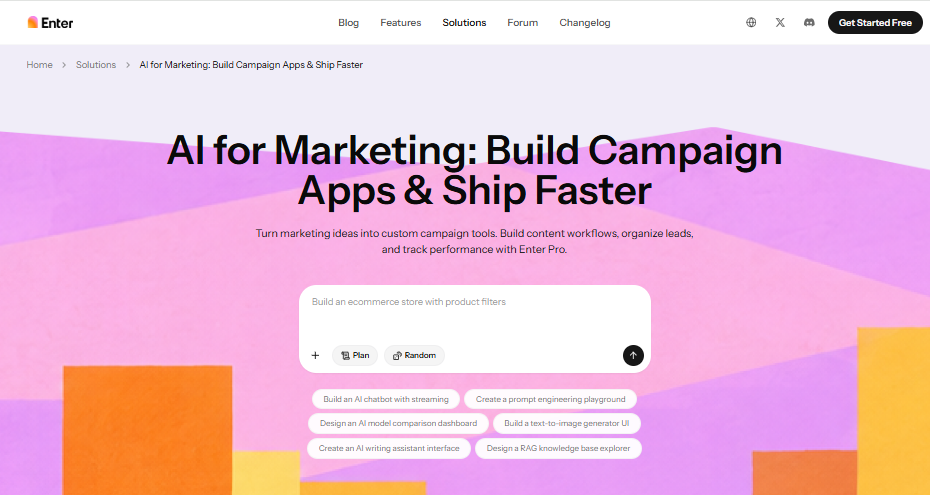
You can also use Enter Pro's AI for Marketing tools to create custom workflows for planning your marketing campaigns or tracking leads.
Step 6. Optimize Landing Pages & Conversion Paths
Let's say you run a cleaning service and are advertising for move out cleaning services. But the advertisement leads to your homepage, which has a description of all your services.
Now the visitor has to navigate to find the information they were looking for.
Instead, you should have a landing page for move out cleaning services that explains the service, the areas you service, common questions, and a clear form to request a quote.
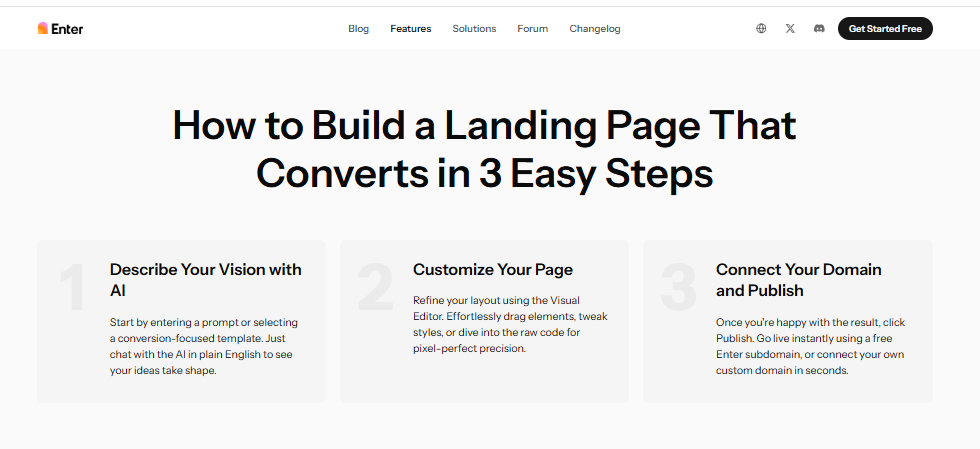
You can use Enter Pro's AI Landing Page Builder to create an initial layout for your landing page. Still, it's important to test the copy, mobile experience, and forms on the page before sending traffic there.
Set up Measurement, Improve the Plan
Some of the most important actions to measure on your website are things like submissions of quotes or bookings. Let’s say you have 1,000 people visiting your website and 20 of them submit inquiries. That means you have an inquiry conversion rate of 20/1000\*100=2%.
A 2% inquiry conversion rate is not an industry benchmark, but rather a hypothetical example. You can use this information to compare your performance over time. Note that the inquiry you get is not necessarily a converted customer.
Website Marketing Channels to Prioritize
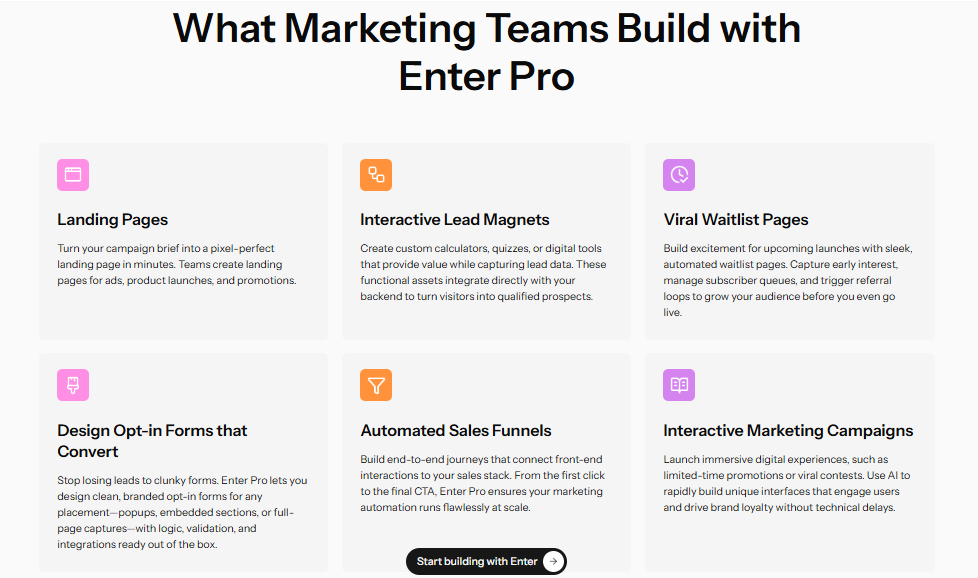
There are different channels that can help you acquire, retain, or re-engage customers. You don’t need to be on all of them, but it helps to know what channels exist when it comes to making marketing decisions.
SEO, Useful Website Content
Let’s say you are looking for a cleaning company in your area. You would want to know what services they offer, where they operate, how much they charge, and how you can get in touch with them.
A website page containing multiple occurrences of your city’s name is not going to cut it.
SEO is about making sure your website content is useful, using good headings and linking structures, and having your web pages accessible to search engines. Some of this will also help with AI search engines, although it does not guarantee you will get included in their AI-generated answers. SEO has a very important role in online website marketing strategy.
Email, Social Media, and Referral Traffic
Email, social media, and referral traffic are another important part of the marketing website strategy. Not every customer is going to be ready to convert at the moment of first contact. For example, a customer might follow your cleaning business on social media, read an article about what to do for a seasonal clean-up, and later get in touch when they have the need.
Email can also be used to reach out to subscribers with relevant information. Referrals also work a bit differently, as the customer comes to you already somewhat convinced of your service.
Regardless of the channel, you want to send people to a web page on your website that is relevant to their initial interest.
Paid Ads, Landing Pages for Campaigns
While advertising can bring people to your website quickly, paying for clicks does not automatically equal getting customers.
For our hypothetical cleaning business, we could, for example, run a small ad campaign offering a special deal on move-out cleaning for people in a certain neighborhood. Instead of sending people to our homepage, we would want a separate page on our website to get people to submit a quote.
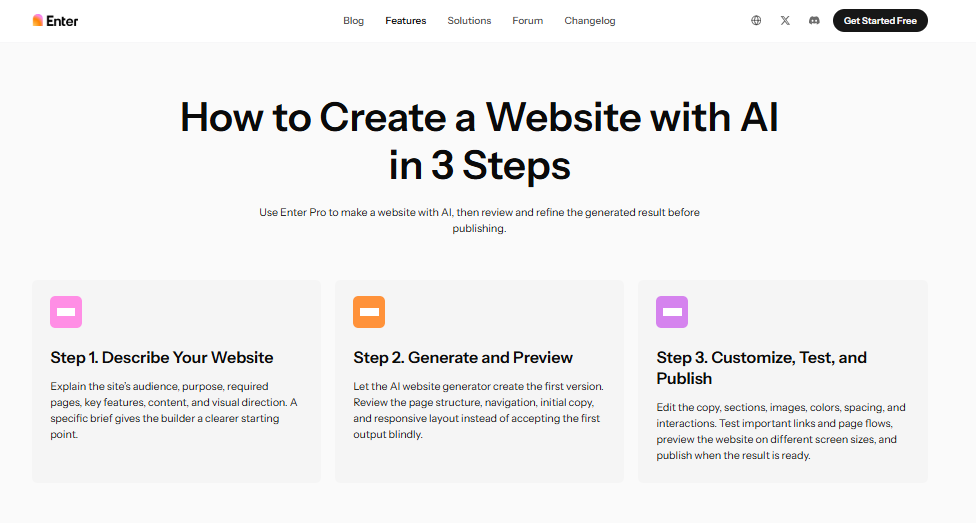
If your existing website is not good for this type of thing, you could create a new website using our AI Website Builder.
How to Measure Website Marketing Performance
Numbers and dashboards are not much good if you are not sure what decisions they will help you make. First, think about the customer journey and identify a few key metrics you can measure based on your goals.
| Business Goal | Metric to Track |
|---|---|
| Improve visibility | Search impressions |
| Attract interested visitors | Website visits on relevant pages |
| Generate inquiries | Form submissions |
| Improve conversion | Inquiry conversion rate |
| Control advertising spend | Cost per qualified lead |
| Generate business | Bookings |
For example, if you run a campaign which costs $100 and gets 5 inquiries, then your cost per inquiry is $20. Whether or not this is worth it depends on the conversion rate to customers and the value of these bookings.
Check these numbers monthly. Be aware that privacy settings on your website or incorrect tracking may hide the true story.
Example 90 Day Website Marketing Plan
We can simplify a marketing website strategy by splitting the work in a few stages.
| Period | Activities | Deliverable |
|---|---|---|
| Days 1-30 | Research customers, audit existing web pages, check form submissions, set up analytics | Priorities and measurements in place |
| Days 31-60 | Improve key web pages for your services, add useful website content, and test out some channels for traffic | Improved web pages, and test campaigns running |
| Days 61-90 | See what inquiries you’ve got, ask customers what they thought of your website, improve web pages that are not performing as well | Improved marketing plan |
The first month of work on our example website could identify that the quote form on the website is hard to find. The second month would then be spent on improving the quote form page and publishing some useful content about cleaning.
By the third month, the website owner would have something to review and act on, even if they haven’t suddenly seen a flood of new leads.
Website Marketing Mistakes
Sometimes a marketing strategy website campaign does not go as planned, because of a few common mistakes.
| Mistake | What Happens? | Better Approach |
|---|---|---|
| Target everyone | Campaign messages are too generic | Target specific audiences |
| Send people to the homepage | Visitors don’t know where to go or what to do | Use landing pages relevant to the ad |
| Publish several similar articles | Content pieces work against each other | Ensure each page has a purpose |
| Forget to make it mobile friendly | People don’t convert | Test the website on mobile devices |
| Only measure traffic | You don’t know how good the leads are | Measure conversions as well as traffic |
| Make multiple changes at once | You don’t know which change helped | Make one change at a time |
Before you pour money into advertising, make sure your website visitors have a clear idea what you are about and can take the action you want them to.
Final Thoughts on Website Marketing Strategy
Your website doesn’t need to be using all marketing channels, but it should be helping you to reach the right people, answer their questions, and give them a way to move forward.
To get started, identify one part of your customer journey that is not working as well as it could be and improve it. Keep track of what is happening and use that information to prioritize what to work on next. It’s easier to focus on a plan than it is to deal with a long list of marketing tactics.
FAQs About Website Marketing Strategy
What is a website marketing strategy?
A marketing website strategy is a plan for getting the right kind of visitors to your website and getting them to perform some useful action. For example, you may want to bring in visitors looking for a cleaning service in your area to a web page where they can request a quote from you.
How do I create a website marketing strategy?
First, you need to know who you are trying to attract to your website and understand your current website. From there, you want to make sure you are meeting your customers’ needs with relevant web pages, and have some kind of content that they will find useful. You need to select channels to bring in traffic, improve your website for conversions, and finally measure and understand what is happening on your website. How you do this depends on your budget and time you have to work on this.
How is website marketing different from SEO?
While SEO is about getting better visibility in organic search results, website marketing is a much broader topic. It includes SEO, but also social media marketing, email marketing, paid campaigns, landing pages, and improving conversions.
Which website marketing channel is best for beginners?
It depends on your business. For a local business, local search and referrals might be a good place to start. For an e-commerce business, you might need something different. The best channel to start with is one that you can maintain and measure.
How much will marketing my website cost?
There are various costs associated with marketing your website, depending on the tools, content, advertising and/or professional help you choose to use. Some enhancements will cost you more time than money, while others (such as advertising and special software) will have additional costs. Enter Pro can help you create a website but please check their pricing and any additional marketing costs.
How long will it take for a website marketing strategy to be effective?
You can make improvements to your website in days or weeks, but it can take longer to generate consistent traffic or qualified leads. Search visibility, competition and customer behaviours can all influence the amount of time a strategy takes to be effective. A 90-day plan is a useful way to plan your activity, but it does not guarantee results.
How do I know if my website marketing is working?
The best way to do this is to compare the goals you have set for your marketing with the actual results you are achieving. You could, for example, measure visits to your website, the number of enquiries or bookings, conversion rates, and how much you’re spending on advertising. So, if your cleaning business website is receiving more traffic but you’re not receiving any additional requests for a quote then you’ll need to investigate what your visitors are seeing before spending more money on promotion.
Do I have to create a new website in order to improve my marketing?
Not necessarily. You might just need to improve your website with clearer service pages, better navigation or faster loading times. You might also need to make it easier for visitors to contact you with more obvious contact forms. If you don’t feel your current website meets your needs, Enter Pro’s AI Website Builder can help you create a new one. However, you should still test your website before launching it.