How to Sell Art Online: A Step-by-Step Guide for Beginners
Learn how to sell art online, from pricing originals and prints to choosing platforms, building a store, shipping artwork, and finding your first buyers.
Maybe you've completed some great paintings or illustrations, but how do you convert your finished art into something sellable? Selling art online requires more than just putting your art on the Internet; you also have to make sure that people are able to find your art, see what they're getting, pay for it, and receive what you promised to deliver.
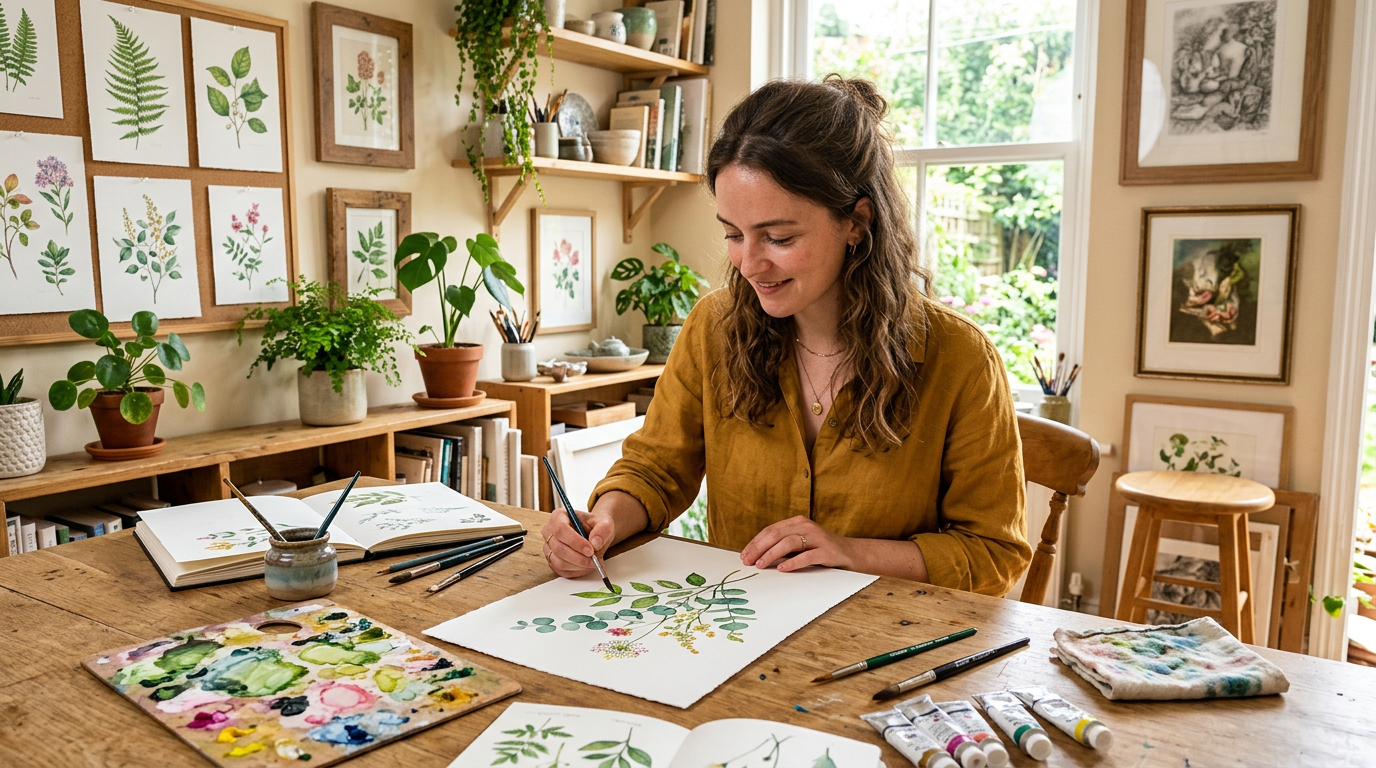
If you're looking to learn how to sell art online, you should start by creating a small selection of products. For example, if you're an illustrator and you've created five great botanical drawings, you could sell each one in a few different formats such as the original piece itself, an affordable print, and a digital file download.
Then, you can learn a little bit from these early sales so that you don't feel like you need to put all of your eggs in one basket.
What Kind of Art Can You Sell Online?
The format in which you choose to sell your art is important because it affects your costs, delivery method, and customer experience. For example, our illustrator could sell the same botanical drawing in a number of different formats.
| Format | What You Sell | Main Concern |
|---|---|---|
| Original artwork | A unique, one-off physical piece of art | Packaging and price |
| Art print | A printed copy of the artwork | Print quality and margins |
| Digital file | A downloadable art file | File delivery and usage rights |
Original Drawings and Paintings
If you have original paintings and drawings, you will most often sell these as ready-to-ship pieces. If you are taking commissions instead, you will create them after a customer makes a purchase. It is good to discuss commission briefs, deposits, number of revisions, and deadlines beforehand.
When you sell original art, it is important to clearly state the size, medium, condition, and authenticity of the piece. Be sure to package your art well for shipping.
Art Prints and Print-on-Demand Products
You can choose to create and hold your own art print inventory, or you can outsource your print orders to a local print shop or a print-on-demand (POD) service. If you hold your own art print stock, you’ll have more control over the packaging and shipping process.
If you use a POD service, your items will be produced when an order is placed. Whatever you choose, be sure to first order a print proof from your printer, as color and paper texture can be different from what you see on your monitor, and even if you use POD, customers will still reach out to you in case of any problems with their orders.
Digital Art and Downloadables
If you have digital art or downloadable wall art prints, you will need to provide specific details of the files you are selling. This includes file formats, dimensions, resolution, and whether or not the license allows for personal or commercial use.
Make sure that the buyer will actually be able to access the file they purchased. You should provide a preview of the art, so that the buyer can see it well enough, but not as well as the actual product being sold.
How to Sell Art Online: 8 Steps
You do not need a perfect-looking online store to make your first sale, you just need to have a good offer. Let’s walk through the steps our botanical artist might take to get her first collection ready and test the whole sales process.
Step 1. Determine Your Target Market and Art Offer
Are you selling botanical art to people who want to decorate their homes, or to people who are looking for a unique gift? Or maybe you’re selling to people who are interested in art prints or stationery. Our fictional botanical artist does research on the market to see what similar artists are selling. She reviews questions from potential customers to see what formats and products they are interested in. She decides to start with two original paintings, three different art print options, and a digital download.
Step 2. Get Your Artwork Ready and Take Good Photos
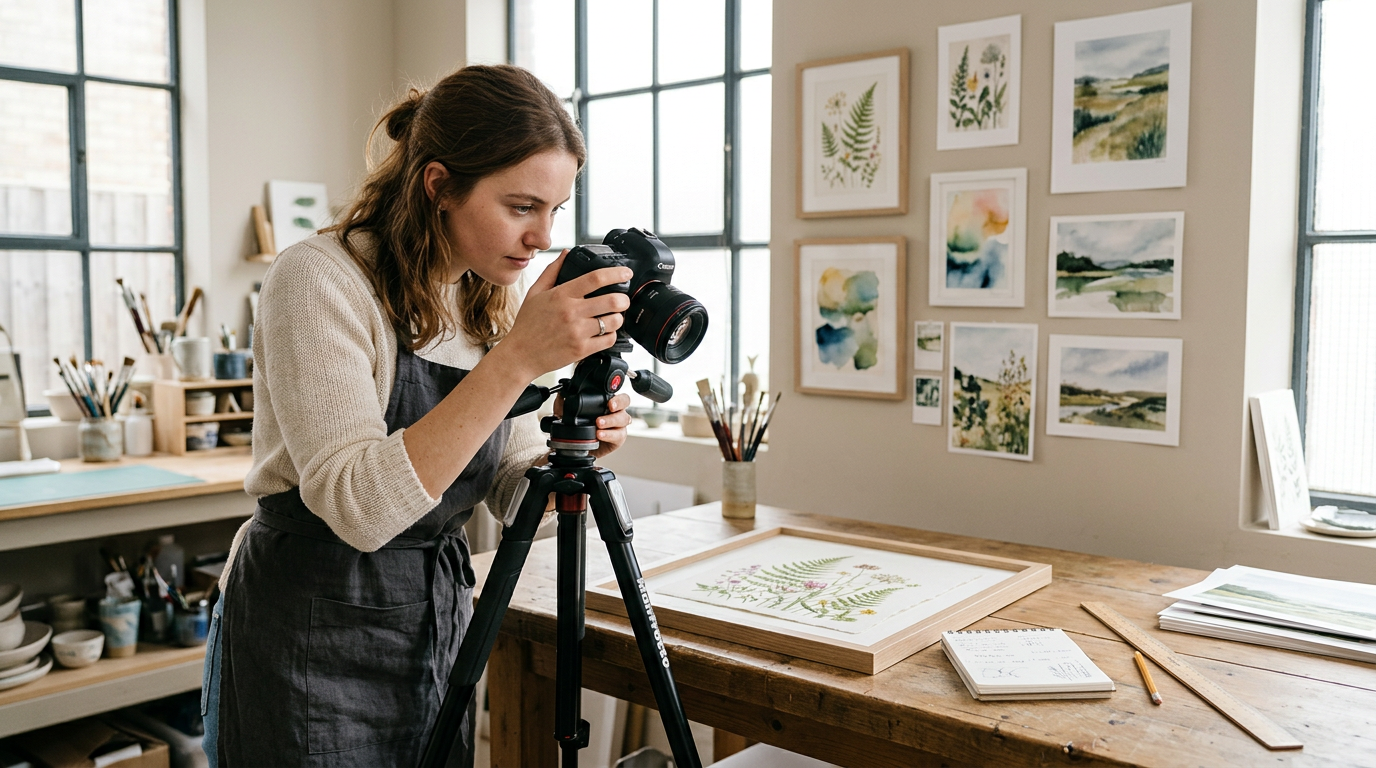
For your original paintings, take photos of them in good, even lighting. Try to include a close up of your artwork, and a photo that gives the viewer a sense of scale. For your illustrations, be sure to scan them at a resolution that is appropriate for printing.
In your product listings, include the title, dimensions, medium, and condition of your originals. If you are selling digital art, provide a good preview image and list all the files included in the sale. You don’t want your customers to be unsure about what they will get!
Step 3. Price Your Art to Make Profit
When artists search for “how to sell art online and make money”, they are often focused on the price at which they sell. However, if you sell your prints for $60, you won’t end up earning $60 in profit. For example, here’s a breakdown of costs for a hypothetical order of a print:
| Order value | $ |
|---|---|
| Sell price | 60 |
| Production cost | -14 |
| Packaging and shipping subsidy | -6 |
| Marketplace and payment fees | -5 |
| Promotion costs | -8 |
| Remaining, before labor and overhead and taxes | 27 |
Again, be sure to get quotes from your own print suppliers, rather than use these example figures. For originals, you should consider both the cost of your time and materials. For digital art, there are no shipping costs, but there are still production costs as well as platform fees and costs of supporting customers.
Step 4. Decide Where to Sell Your Art
Online marketplaces are a good way to get exposure to a wider market, but they come with fees and other restrictions. A personal website, on the other hand, allows you more flexibility with presentation and customer interaction.
It also means you have to generate your own traffic, rather than relying on a marketplace to provide a built-in audience. Start selling where you think your ideal customer spends time, and don’t expand to other channels until you’re sure you can handle the extra order volume and administrative overhead.
Step 5. Create Your Artist Website and Product Listings
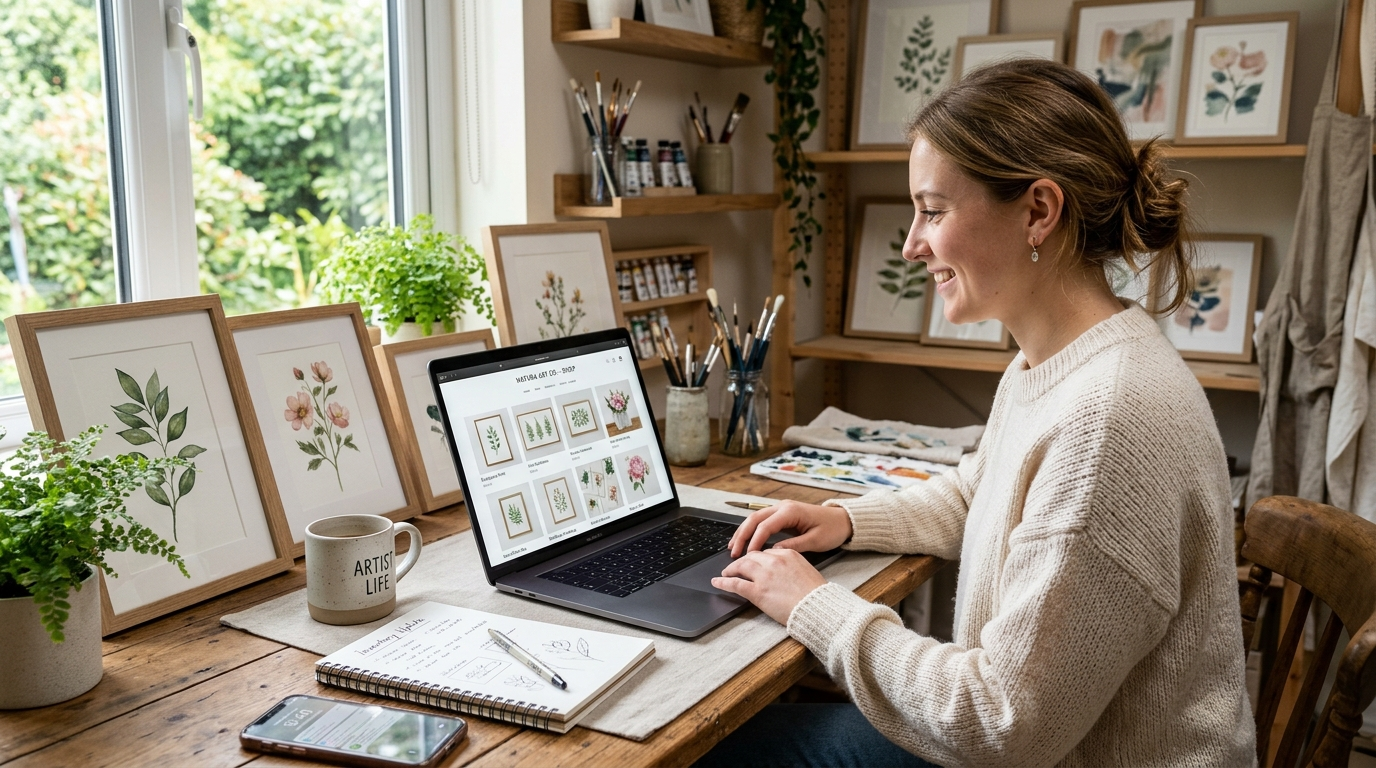
Choose a website builder, pick a simple theme, and build a site with the essential pages for an artist’s site: home page, gallery, artist bio, and contact us. Our botanical artist adds her first painting to the gallery, with good photos, and descriptions of its size, medium, price, and availability. She also adds a cart and relevant policies, and enables the payment options she wants to support.
Enter Pro’s Ecommerce Website Builder could help you set up a branded online store with product listings. However, be sure to check your site’s checkout process, shipping settings, and integration with your downloadables before launching your store.
Step 6. Set Up Payment, Shipping, and Customer Service
Be sure to check that you are eligible to accept payments with the providers you want to use. For original artwork, you should decide on how you want to package and insure more expensive shipments, and how you’ll handle damage in transit.
If you are selling art prints, confirm whether or not you will fulfill print orders. For digital art, be sure that your download link works. As a final check, make a test order from your site on your phone, and review the receipt, tracking or download link, and refund policy.
Step 7. Launch Your First Collection and Promote Your Store
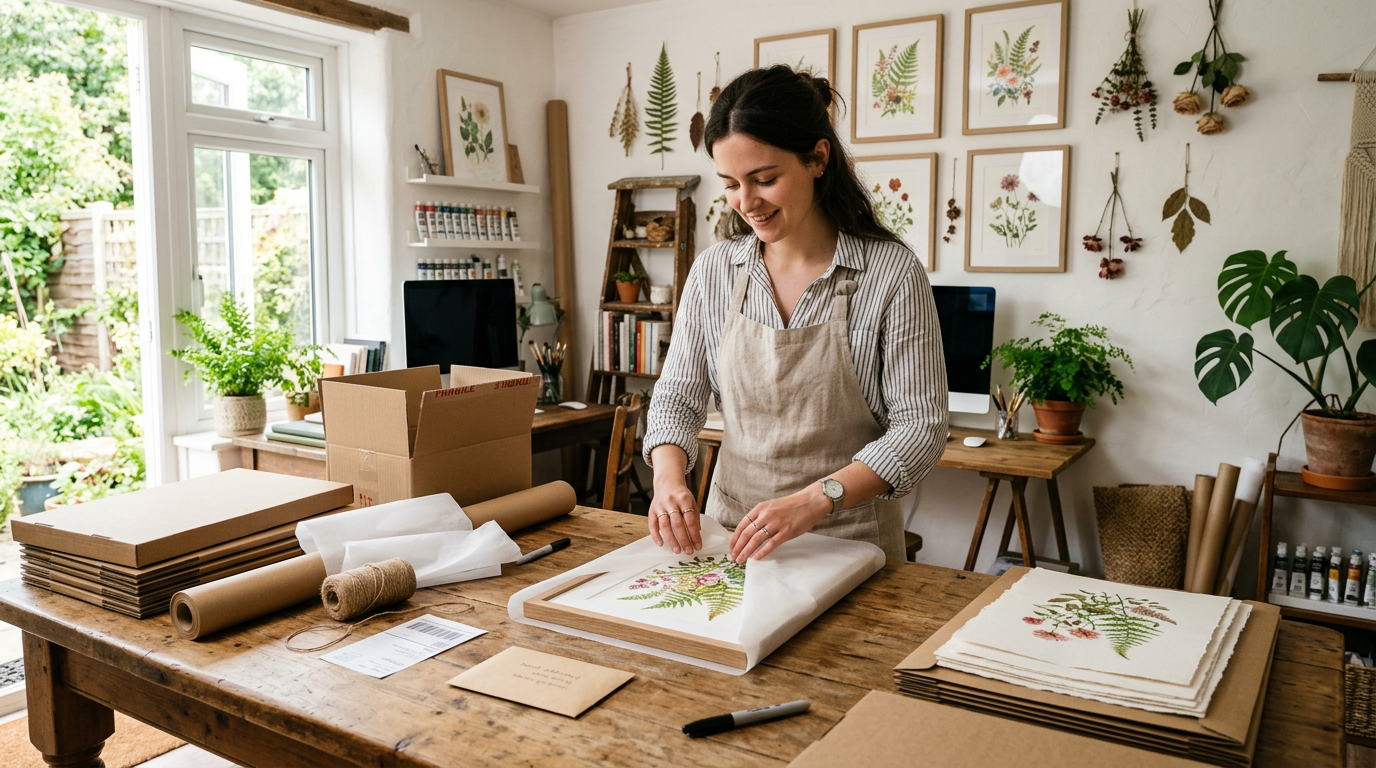
Our botanical artist could make a video of herself drawing botanical illustrations, and send an email to her opt-in list about her first collection. She could also create a page on her website with some information about her botanical art series. When you launch your first collection, be sure to make a big announcement, instead of just posting random things on your social media feeds!
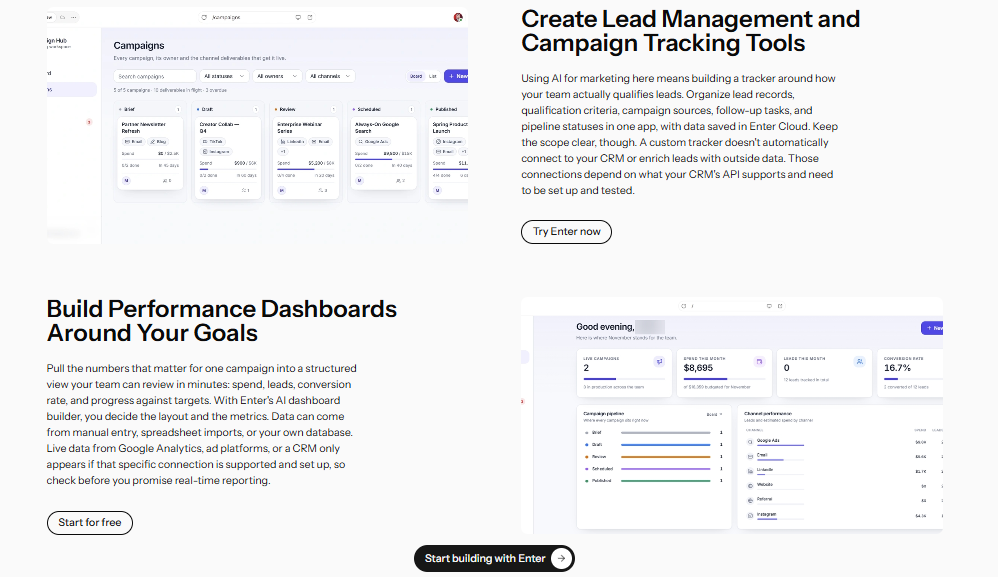
Enter Pro’s AI for Marketing solution could help with creating a custom content calendar, and tools to track your marketing campaigns. However, you will need to make sure that you are focusing on your artwork and story, as well as interacting with customers.
Step 8. Evaluate Your Sales, and Improve Your Product Offer
Keep track of important metrics such as website visits, number of orders, average order value, refund requests, costs, and customer questions. For example, you may find that customers are interested in your prints, but not willing to pay for shipping.
Or you may find that one size of prints is much more popular than another. Instead of just copying what a competitor is selling, take feedback from actual customers and use that to improve your own product offer.
Where to Sell Art Online
There is no one best online marketplace to sell art on. Make sure to check whether you are eligible to sell on any of the following platforms, as well as their fees and product categories.
| Channel | Best for | Caveat |
|---|---|---|
| Etsy | Prints, handmade art, digital products | Marketplace fees, competition |
| Saatchi Art | Fine art, originals | Seller eligibility, commissions |
| Artfinder | Original art | Seller eligibility |
| Print on demand service | Prints (without holding inventory) | Less control over production |
| Personal website | Art from an individual artist | Need to generate traffic |
How to Sell Digital Art Online Without Shipping Physical Products
As for how to sell digital art online, first you should decide the right size and format to provide the file, as well as the instructions to get a print of that digital artwork. You should specify if the purchaser will only have rights to the image for personal use or can use it for other purposes as well. Of course, you should keep a backup of the original and check the complete payment and downloading process.
The illustration above could also be sold as a physical print using a POD, but that's a different product. In that case, a supplier is manufacturing the artwork and shipping it, and quality of the print and shipping are still things you should pay attention to.
How to Sell Art Prints Online Without Losing Your Margin
In the case of how to sell art prints online, it's good to compare fulfillment costs to pick the right supplier. Here, our illustrator can sell one print, or offer one small and one larger size. She should also explain her choice of paper and frame.
| Task | Fulfillment Cost if Stocking Prints | Fulfillment Cost with a Print-On-Demand Supplier |
|---|---|---|
| Proofing and color checks | Done yourself | Done by you, using the POD samples |
| Printing | Pay for the entire batch of prints, even if only a few sell | Pay for each print as it's ordered |
| Packing and shipping | Done by you (you pay the postage) | Fulfilled by the supplier with separate verification required for quotations of production, packaging, and shipping costs |
| Damages and returns | Managed by you | Managed by you and the POD supplier |
A limited edition has a specific number of prints; open editions do not have a print limit. In either case, you should not market open editions as rare or limited, and should account for the cost of replacing damaged orders.
How Much Does it Cost to Start Selling Art Online?
Your startup costs depend on the kind of art you're selling (originals, prints, files, etc.) At a minimum, you could start selling your work online by taking photos of work you already have, ordering one print proof, buying some packaging, and paying any relevant fees for your selling platform.
Selling stocked prints requires more startup capital, and you'll also have ongoing costs like transaction fees, shipping costs, platform fees, and promotion.
It's good to make a budget before you start selling online. Remember that your sales are not your profit! You may need to put aside some funds for replacements or refunds.
How to Build Trust with Art Buyers
You should present your artwork with good photos of it, and provide an artist bio so customers know more about you. Make sure to include a description that mentions materials, dimensions, edition number (if relevant), shipping info, and return policy. Accept secure payment methods supported by your platform, and be responsive to questions.
Positive reviews can help with trust, but you should not create fake reviews for your work. It's important to note that when a customer buys a physical piece of artwork, this does not necessarily transfer the artist's copyright. If your customer will get the rights to reproduce your artwork or use it commercially, you should make this clear.
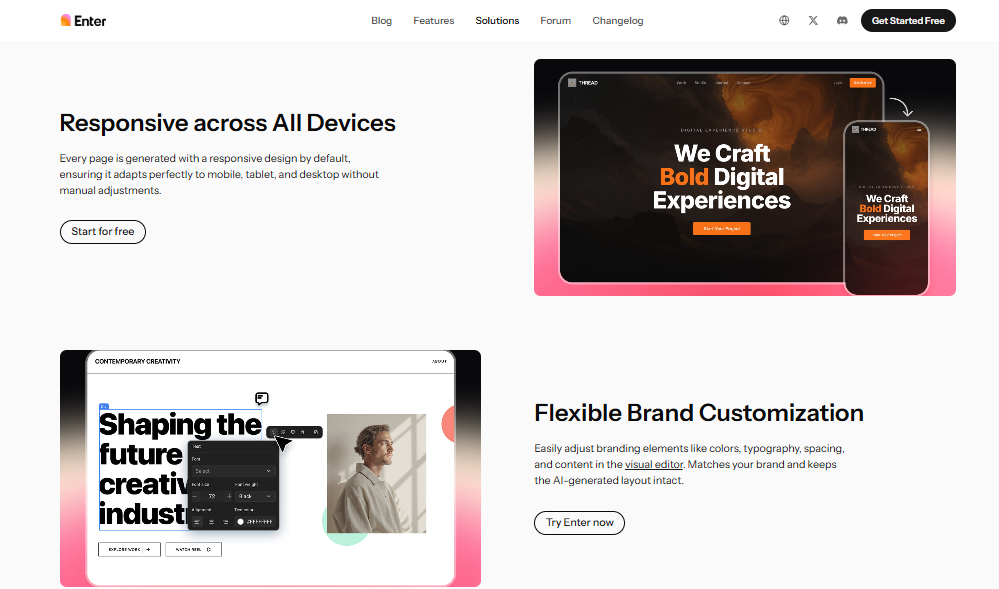
You can use Enter Pro's AI Page Generator to help you create pages for your art collection, bio, and other information. But you should always double-check everything!
Mistakes Artists Make When Trying to Sell Online
There are some mistakes that you can avoid when selling your art online.
| Mistake | What Happens | Best Practice |
|---|---|---|
| Selling your work for too low of a price | You don't make much money after your costs | Calculate all your costs |
| Taking poor photos | Buyers can't see your work well | Take good photos, and indicate scale |
| Being unclear about the rights to reproduce your work | You can end up in a dispute about use of your work | Be clear about the rights |
| Not checking proofs with a print on demand supplier | You might get a print of poor quality or unexpected color | Order a proof to check color and print quality |
| Only relying on your social media following to drive traffic to your work | Traffic to your website or selling platform can be unreliable | Have a collection page that people can find reliably |
| Not being clear about shipping costs | Buyers will abandon checkout if they see high shipping at the end | Be clear about the cost of delivery |
| Not taking care with packaging and not being clear about delivery times | Your work might be damaged or buyers might get upset | Test your packaging and delivery time |
| Not testing your checkout | Buyers might be unable to buy from you | Test your checkout and buying process |
Final Thoughts: Start Selling with One Collection and Refine it as You Get Orders
You don't need a huge following or a gallery full of art to start selling your work online. Instead, you should pick your buyers, prepare a collection to sell, price it well, and make sure you have a good ordering process.
You can also use Enter's pro solutions such as website builder, AI for marketing, or AI page builder to enhance page appearance.
Our fictional character of the botanical illustrator can learn more about her audience and potential buyers by actually receiving some inquiries and orders than by adding more and more products. It's good to keep improving your offering, based on customer feedback!
FAQs About Selling Art Online
How do I start selling my art online as a beginner?
As a beginner, you should start by selecting a few pieces of art for a particular audience. Take good photos and price your work well. Then, choose a platform to sell from and test the ordering process. Consider this first step as an experiment, rather than a test of whether people will buy from you.
What's the best website to sell my art online?
The best website to sell your art online depends on the kind of art you sell, who you want to sell it to, the fees and eligibility requirements of that platform. You could start by selling on a marketplace, or have your own storefront. Enter Pro lets you build your own artist website.
Can I sell art online without a website?
Yes, you can. Some marketplaces and social platforms allow you to sell your art, if you're eligible. However, you might want to have your own website as a separate place where people can see your art and your collection.
How do I price my artwork so I can make money?
You should consider your costs, which include materials, production, packaging, shipping, fees, and your time and overheads. You should also consider the prices of other similar work and what your customers would value in your work. The revenue you receive from selling your work is not necessarily the money you can keep.
How can I sell digital art online?
To sell digital art online, you should prepare files that your customers can download, and provide clear previews of your work. You should be clear about the rights to reproduce or use your work, and select a platform where customers can securely purchase your work and access it.
How can I sell art prints online?
You should decide whether you want to sell stocked prints or use print on demand for your art prints. You should check the quality of prints, as well as the paper stock and sizes that the POD supplier offers, the cost of shipping, and the cost to replace damaged prints. You should also check their margin. If you're selling limited editions, you should be clear about the edition number.
Do I need a business license to sell art online?
Whether you need a business license to sell your art online depends on where you're selling, and where you're located, as well as the type of business you have. You should check what the requirements are for your location and for the types of business activities you're involved with.
Can Enter Pro help me create a website to sell art?
Enter Pro offers tools to build a website to sell your art online. With its e-commerce website builder, you can organize your website to have a branded storefront for your art. However, you should check that your payment, shipping, and checkout setup, as well as integration to sell digital files, are working as expected.