

AI vs Traditional Programming: What’s the Difference and When Should You Use Each?
Explore AI vs traditional programming, including key differences, real-world use cases, costs, and workflows—plus how AI is programmed and when to use each approach.
AI vs Traditional Programming: Which One's Better
As a developer, I have spent years writing strict logic for code. Moreover, I can say for sure now that the debate between AI vs traditional programming changes how we approach problem-solving for modern-day development. A few years back, developers like me had to write code for every function manually. However, these AI-driven development platforms can now really handle complex repetitive tasks. This frees you up to focus on the big picture and high-level architecture of your project.
To really understand both of these approaches, we will look at a single project through the lens of both of these development cycles. We will analyze an automated customer lead-generating engine. As a result, we will be able to see exactly how AI vs traditional programming stacks up in real-world scenarios. Therefore, I will be highlighting the main differences and how you can merge these approaches for the best results.
What Is Traditional Programming?

Traditional programming requires developers to manually write each and every piece of logic your program should follow. This makes you the only source of information for the system. Developers need to be meticulous about every line of code.
The following are some important hallmarks of this type of programming:
- Deterministic logic: Inputs are processed through fixed
if-then-elsestatements. - Manual updates: Adapting to new scenarios requires a human to rewrite the code.
- High predictability: You always know the exact outcome of a specific input.
When building something like the lead-generating engine, we had to manually code every single routing rule. It was highly predictable but incredibly tedious to maintain.
What Is Artificial Intelligence Programming?
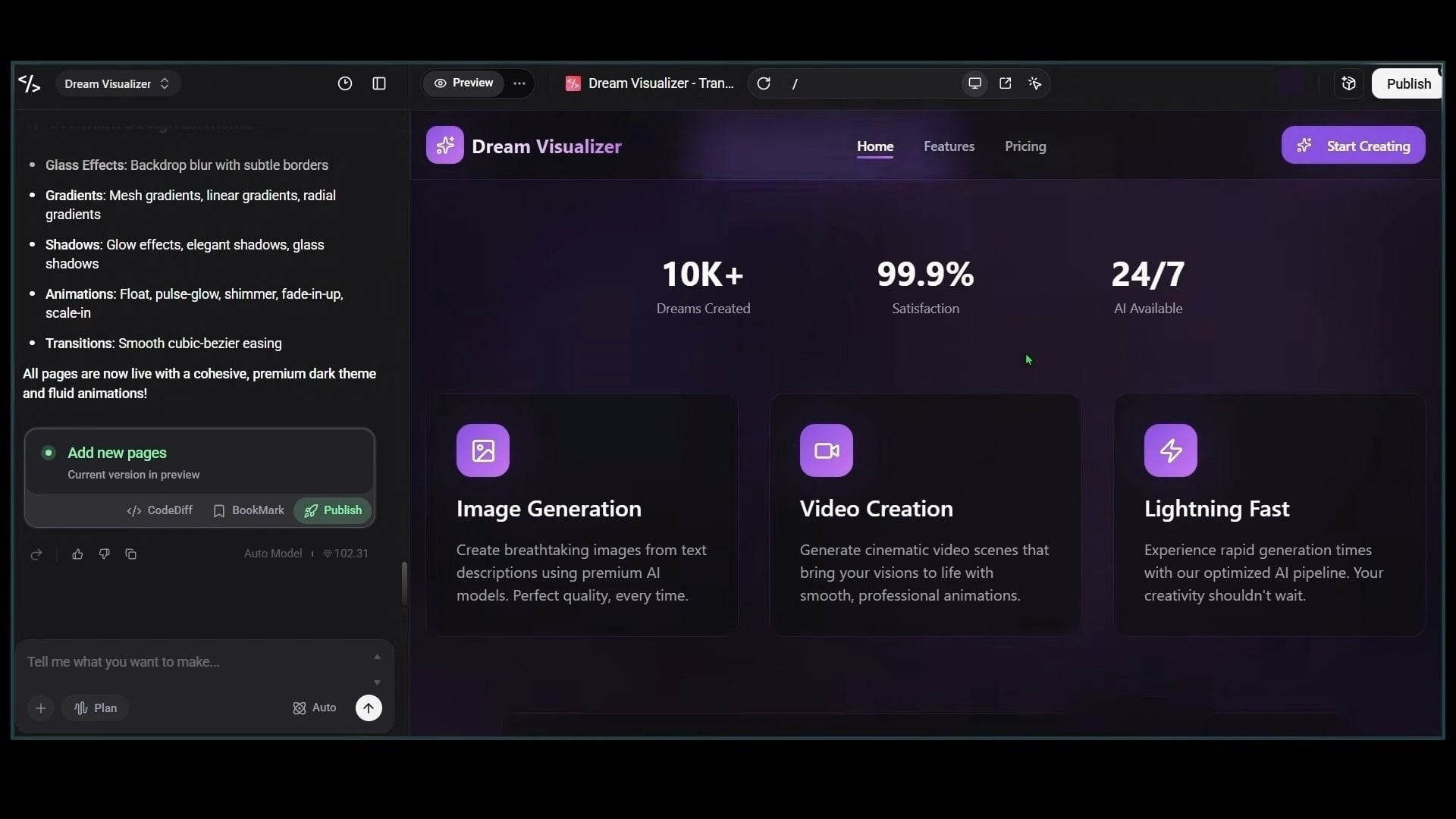
On the other end of the spectrum, Artificial Intelligence programming focuses on using AI to code. We have incredibly powerful models that are trained on billions of parameters of data. Instead of providing hard-coded logic and rules, we provide these models with data.
Therefore, AI programming has the following features:
- Data-driven learning: Models recognize patterns rather than following hard-coded paths.
- Probabilistic outcomes: It generates the most likely correct response based on its training.
- Continuous adaptation: Models can improve over time as they process more information.
This can sometimes allow you to find clever solutions to complex coding problems. For our project, the AI model wrote code that removed the need for endless if-else blocks.
AI vs Traditional Programming — Key Differences
The major difference between AI and traditional programming is the logic behind each line of code. Traditional programming follows a fixed predefined logic, while the other relies on provided data to build its own logic.
If your software needs absolute precision, you use traditional methods. If your software needs to adapt to messy, unstructured human inputs. This can be something like our lead triage engine, where AI can prove to be vastly superior.
Core Comparison Table
Here is a clear breakdown of the core differences between the two paradigms:
| Aspect | Traditional Programming | AI Programming |
|---|---|---|
| Logic | Rule-based and strict | Data-driven and adaptive |
| Output | Deterministic (always the same) | Probabilistic (best guess) |
| Development | Code-first approach | Data-first approach |
| Flexibility | Low flexibility for unexpected data | High adaptability to new patterns |
| Learning | No learning capability | Yes, improves with ongoing data |
Development Workflow Comparison
To truly grasp the impact on your daily workflow, we need to look at how software is actually built under both paradigms.
Traditional Programming Workflow
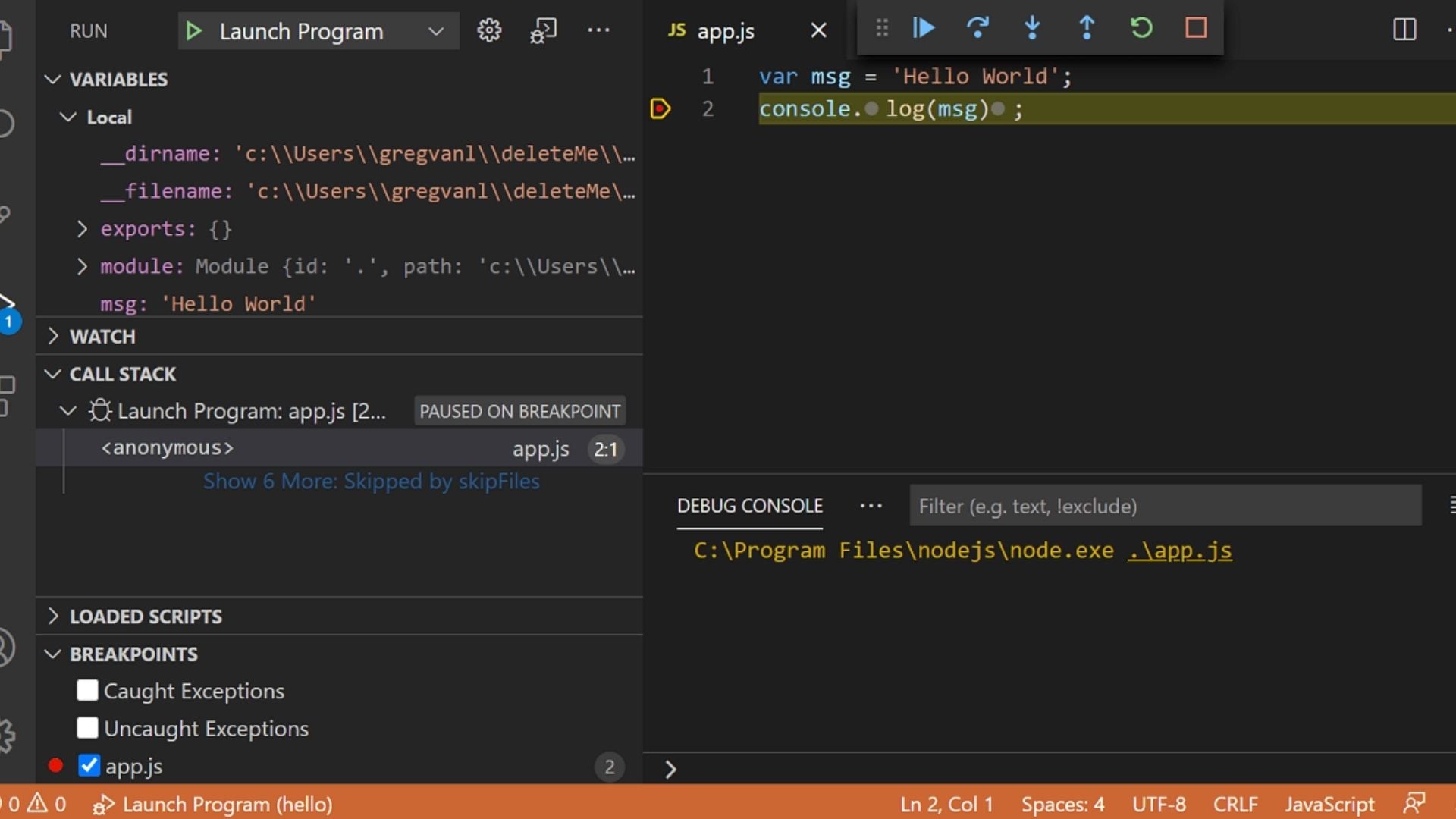
In a standard environment, developers define strict business rules, write code, run unit tests to verify logic, and deploy predictable systems.
- Requirement gathering: Mapping out every edge case manually.
- Logic execution: Writing manual functions for every possible scenario.
- Debugging: Hunting down syntax errors and broken loops.
AI Programming Workflow
Conversely, the process of how is AI programmed flips the script entirely. Teams collect robust data, train their models, evaluate output performance, and continuously optimize systems after deployment.
- Data collection: Gathering large datasets to teach the system.
- Model training: Allowing the AI to map its own internal rules.
- Fine-tuning: Adjusting weights and prompts to improve accuracy.
AI Coding Tools vs Traditional Programming
AI coding tools vs traditional programming is one of the biggest shifts in modern software development. AI assistants like code generators and copilots automate large chunks of development, whereas traditional environments rely entirely on manual keystrokes.
Examples of AI Coding Tools

Modern AI tools act as intelligent pair programmers that dramatically accelerate your output. They handle everything from generating boilerplate code to debugging complex architectures in real time.
- Code generators: Tools that write complete functions from comments.
- Automated debuggers: Systems that spot and fix errors instantly.
- Architecture planners: Assistants that suggest optimal design layouts.
Key Differences in Practice
As a developer, my work has shifted from writing code to reviewing and guiding AI outputs. Now my work does not revolve around building tedious logic rules but creating high-level system designs. I've essentially become a manager for a digital team, guiding AI models just like human co-workers.
From AI vs Traditional Programming to Hybrid Development: Where Enter Pro Fits
Industry experts believe that the choice between AI vs programming should not exist. Modern systems require a blend of both.
The Limitations of Pure AI or Pure Rule-Based Systems

Developers now understand that relying completely on AI or traditional programming is a pitfall. Using all AI can lead to your output being inaccurate. AI can hallucinate and sometimes lead to code that is insecure. This is what modern developers refer to as vibe coding. It can work with small-scale projects that can be done without a few security features. However, on the other hand, manual programming can have a hard time understanding dynamic user behaviour.
The Rise of Hybrid Development
Hybrid development combines deterministic, hard-coded logic with AI-driven intelligence to create incredibly scalable and adaptive systems. You use strict code for your database security and payments, and AI for your unstructured data processing.
Enter Pro as a Hybrid Development Platform
Enter Pro provides the ultimate bridge between AI and traditional programming by enabling seamless integration of models, APIs, and logic-based workflows. It allows you to visually orchestrate both strict rules and AI reasoning in one unified dashboard.
Why Teams Choose Enter Pro
When we built our automated ticketing engine on Enter Pro, the advantages over manual coding and disjointed AI scripts were immediately obvious
- Reduces development time: It completely abstracts complex AI API integrations.
- Lowers the barriers: It empowers teams transitioning into AI to build faster.
- Improves productivity: Integrated AI tooling handles heavy lifting visually.
Qualitative Comparison Matrix
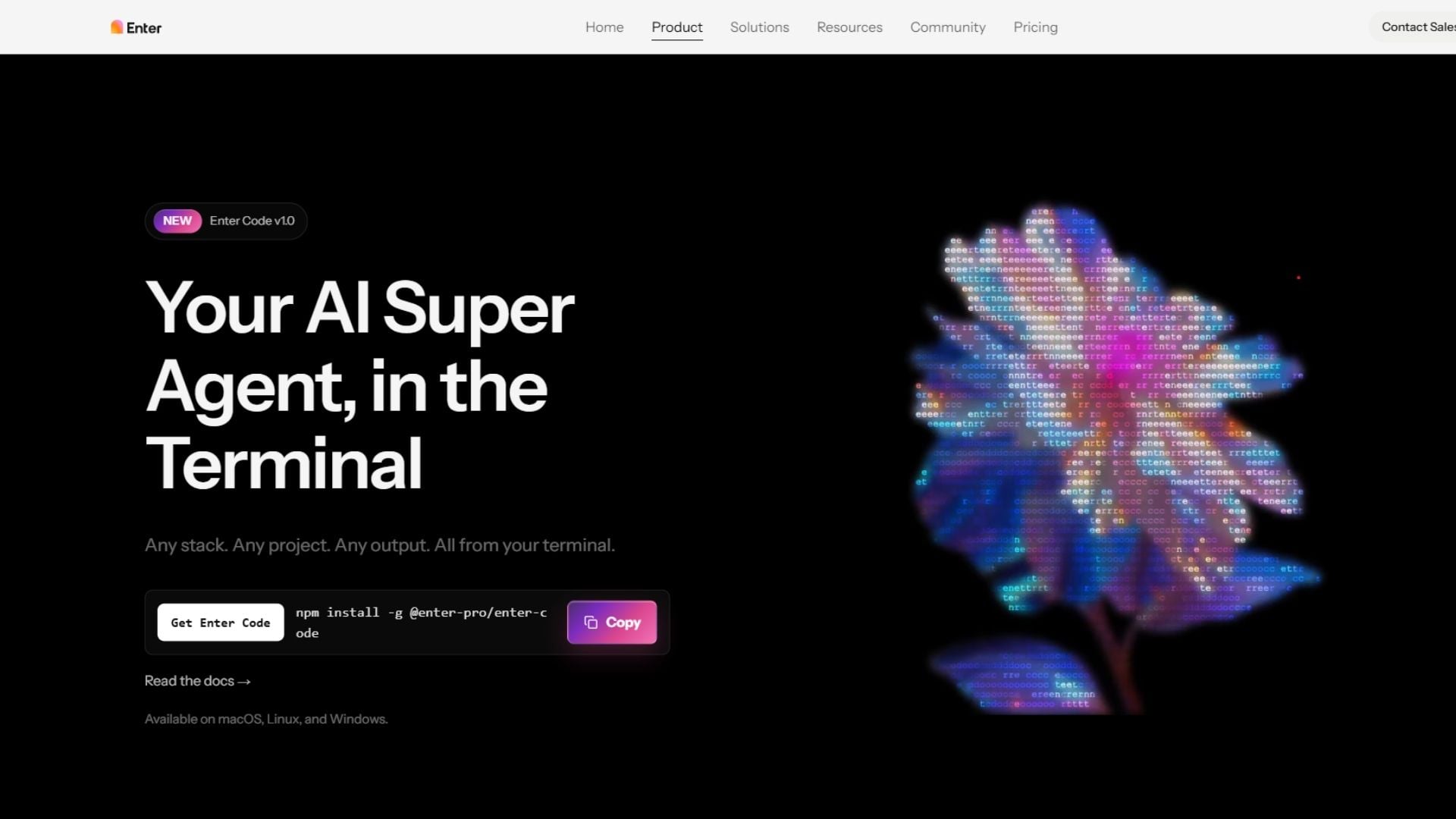
Before exploring Enter Pro's setup, let’s see how it performed against traditional methods and pure CLI AI agents when building our unified test project (the ticketing engine).
| Evaluation Criteria | Traditional Programming | Pure AI Agents | Enter Pro (Hybrid) |
|---|---|---|---|
| Setup Friction | High (manual environment setup) | Medium (CLI and API configurations) | Low (Visual drag-and-drop workspace) |
| Iteration Workflow | Very Slow (manual rewrites) | Unpredictable (hallucination loops) | Fast (Visual Plan Mode & instant previews) |
| Control & Customization | Absolute, but tedious | Very low visual control | High (Component-level editing) |
| Deployment Speed | Weeks | Days (with debugging) | Under 60 minutes |
Real-World Use Cases
Understanding exactly when to deploy each strategy is critical for project success and budget management.
When to Use Traditional Programming
Traditional programming is ideal for strict rule-based systems where precision and safety are non-negotiable.
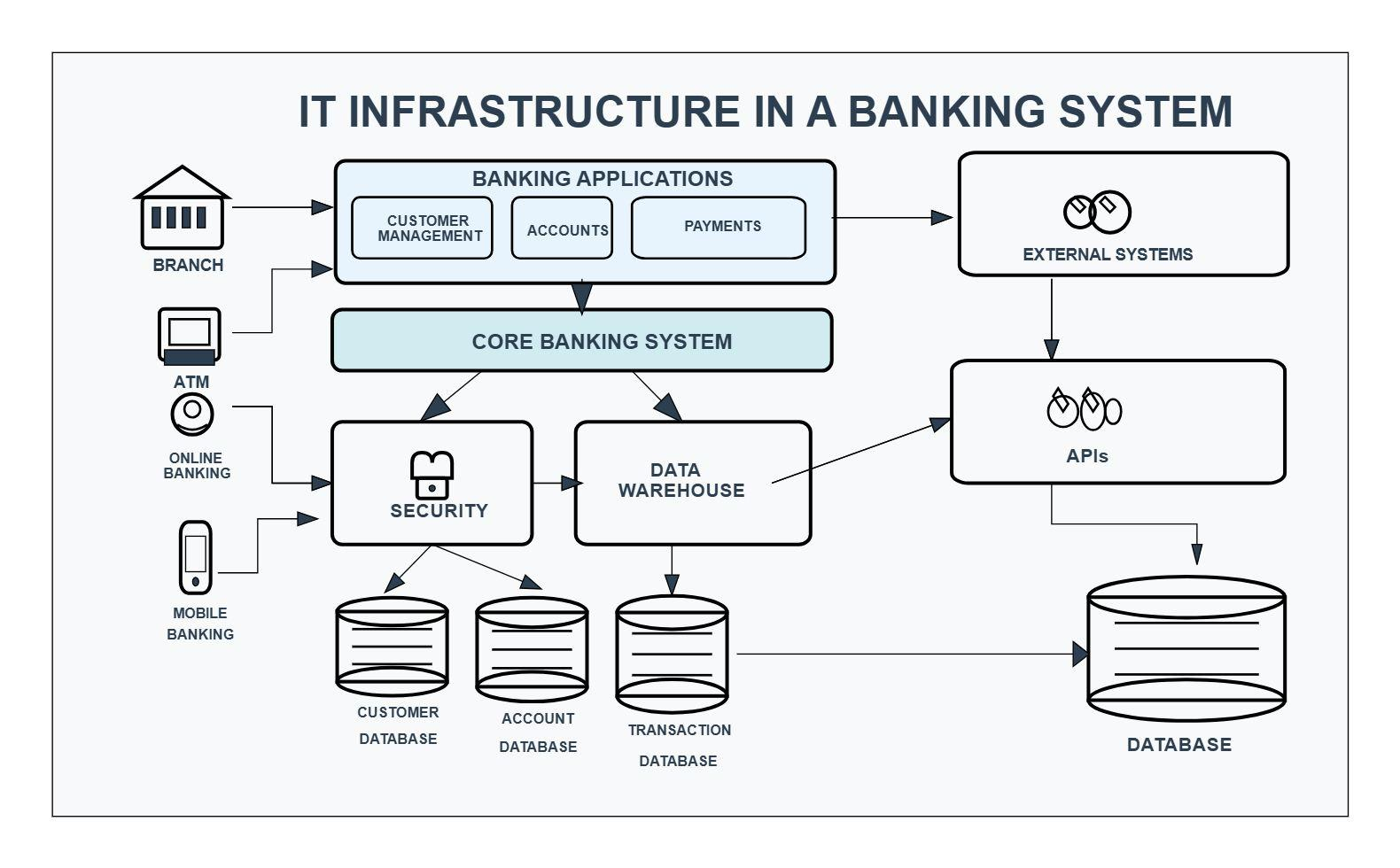
In Financial Systems Environment
- Financial calculations: In environments such as financial systems, every calculation—from transaction totals to currency conversions—must produce consistent, auditable results under all conditions. Even a minor deviation can lead to significant financial discrepancies or compliance issues, which is why deterministic logic and strict validation rules are essential.
- Security protocols: Authentication mechanisms, encryption protocols, and access control frameworks rely on exact rule execution rather than “best guesses.” For example, a login system must definitively determine whether credentials are valid—it cannot “approximate” correctness the way an AI model might. The reliability of these systems depends on clear logic paths, predefined conditions, and verifiable outcomes.
- Hardware firmware: Devices like medical equipment, automotive control units, and industrial machinery operate under strict performance and safety constraints. In these contexts, software must interact directly with hardware in a stable and predictable way, often with real-time requirements. Any unexpected behavior could lead to system failure or even physical risk, making traditional, rule-based programming the only viable approach.
When to Use AI Programming
AI programming is better suited for pattern recognition tasks and handling unstructured human data where rigid rules fail.

- Image analysis: In real-world environments, images can vary dramatically due to lighting, angles, backgrounds, and quality. Writing explicit rules to handle every possible variation is nearly impossible. AI models, particularly those based on deep learning, can generalize from training data to recognize objects across diverse conditions, making them far more effective for tasks like facial recognition, medical imaging, or quality inspection.
- Recommendation systems: Platforms that suggest products, videos, or content must account for constantly changing user behavior, preferences, and context. Instead of static rules, AI systems analyze user interactions, detect patterns, and dynamically adjust recommendations in real time. This adaptability is what enables personalized experiences at scale.
- Natural language processing: Human language is inherently ambiguous, context-dependent, and highly variable. Traditional programming would require an impractical number of rules to handle every phrasing or intent. AI-powered systems, such as chatbots and virtual assistants, can interpret meaning, handle variations in wording, and respond in a way that feels more natural and context-aware, making them significantly more effective for customer interaction and communication tasks.
AI vs Programming — When Should You Choose Each?
Choosing between AI vs traditional programming depends heavily on whether your core problem is rule-based or data-driven. You must factor in project scalability, computational cost, and your tolerance for uncertainty.
Which One Should You Choose?
Choose Traditional Programming if: Your application relies on strict mathematical precision, compliance-heavy data storage, or embedded systems.
Choose Enter Pro if: You want to build a hybrid application rapidly. Enter Pro lets you seamlessly snap deterministic databases together with advanced AI models, giving you the best of both worlds in a fraction of the time.
Cost, Complexity, and Scalability
AI systems typically require a significantly higher upfront investment in data collection, model training, and GPU infrastructure. However, they scale infinitely better for complex, dynamic problems. Traditional programming is cheaper to start but becomes exponentially more complex and expensive to scale as you try to hard-code endless new edge cases.
The Future — Will AI Replace Traditional Programming?
The debate between ai vs traditional programming is no longer about picking a side. Now it is about knowing how to integrate them. A common fear is that AI will eliminate software engineers. The reality is that AI will not replace traditional programming. I believe it will aggressively augment it. Developers are increasingly becoming hybrid engineers, using agents like Enter Pro to write code while they manage the system architecture and business logic.
FAQ — AI vs Traditional Programming
FAQ 1: What is the difference between AI and traditional programming?
The main difference is how they solve problems. Traditional programming uses strict, handwritten rules. AI programming learns how to act by looking at data patterns.
FAQ 2: How is AI programmed?
Developers do not write every single rule by hand. Instead, they feed massive datasets into a statistical model. The AI trains on this data to learn the rules itself.
FAQ 3: Is AI better than traditional programming?
Neither approach is always better. AI is amazing at handling messy, unstructured data. Traditional coding is still required for strict, exact math.
FAQ 4: Can AI replace programmers?
No, AI will not replace human coders. It drastically boosts productivity and speed. Humans are still needed to oversee architecture and make big choices.
FAQ 5: Are AI coding tools expensive?
Some command-line AI tools charge unpredictable fees based on the tokens you use. Visual builders usually offer a flat monthly subscription price. This makes budgeting much easier.
FAQ 6: Do I need to know how to code to use AI?
Not necessarily. Platforms like Enter Pro hide the complex code for you. You can build visual software just by typing normal sentences.
FAQ 7: What language is best for AI?
Python is the top choice for training AI models. It handles heavy data extremely well. For building full web apps, developers mostly use JavaScript or TypeScript.
FAQ 8: Why is deterministic logic important?
Deterministic logic means a specific input always gives the exact same output. This reliability is absolutely critical. It keeps passwords, banking, and security systems safe.