

GLM-5 Review: Versions, Benchmarks, Pricing, and Access
Compare GLM-5 versions, benchmarks, pricing, architecture, local deployment, API access, and Enter Pro integration to choose the right model for your workflow.
GLM-5 is no longer a single model that can be evaluated based on a single benchmark. It's a speedy family: some variants are text-only, others allow for image input, newer versions have increased to a 1 million token context window, and the most affordable option is a fraction of the flagship.
Prior to updating this review, I have looked at Z.ai's release notes, model cards, API documentation, repository, and live product screenshots. That is significant because some of the claims made are quite appealing — such as 50% internal coding gain or 2.9× lower long-context compute — and are from Z.ai, rather than an independent audit. I call those claims, rather than my own results of testing.
When selecting a GLM-5 model, there are 4 questions to consider: What inputs do you have? What is the level of difficulty for the task? Where does one need to make an inference? How much does one successful result cost if there are retries? My quick answer is GLM-5.3 for more complex text/coding, GLM-5.3-Flash if you need multimodal / cost, and GLM-5.2 if you have an existing validated integration.
What Is GLM-5?
The family of open-weight models developed by Z.ai for software engineering, tool use, and long-horizon agents is named GLM-5. The original release (February 2026) is a text-input, text-output Mixture-of-Experts (MoE) model that has 744 billion total parameters, approximately 40 billion active parameters per token, and a context window of 200,000 tokens. Those specifications come from the GLM-5 technical report and official GitHub repository.
An MoE model does not activate the whole network for every token. A router sends each token to a small group of experts, reducing active computation while retaining a very large checkpoint. That does not make GLM-5 a laptop model: the full weights still need storage, routing, and server-class hardware.
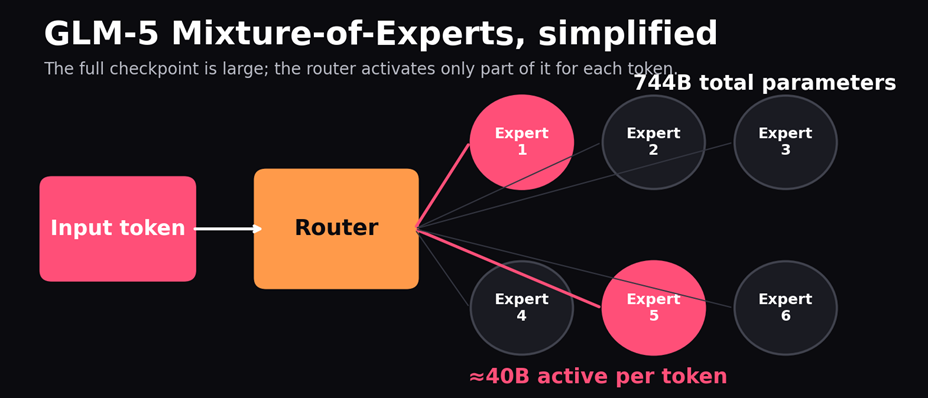
Figure 1. GLM-5 activates roughly 40B of 744B parameters per token; the complete checkpoint remains a server-scale deployment.
The correct term is ‘open weights'. There are different terms for code, model weights, hosted service, and training data. You should consult the license accompanying the model card you intend to use before making any commercial use,e as not all the GLM versions may have the same rights.
The GLM-5 Version Family
The family name hides important differences. Choose by modality, context, validation history, and deployment route rather than treating every 5.x release as interchangeable.
| Version | Input/context | Best reason to use it | Important caveat |
|---|---|---|---|
| GLM-5 | Text / 200K | Original research or a legacy integration | First family release; not my default for a new build |
| GLM-5-Turbo | Text / 200K | Hosted, tool-heavy agent work | A provider route, not a small downloadable checkpoint |
| GLM-5V-Turbo | Text, images, video, files / 200K | Visual coding and GUI tasks | Confirm accepted formats at your endpoint |
| GLM-5.1 | Text / 200K | Sustained engineering runs | Superseded for most new evaluations |
| GLM-5.2 | Text / 1M | Long context and proven integrations | Migration to 5.3 changes reasoning behavior |
| GLM-5.3 | Text / 1M | Difficult coding and long-running agents | Reasoning is always on; output can be long |
| GLM-5.3-Flash | Multimodal / 1M | Screenshots, volume, and low cost | Separate 320B/18B architecture, not “5.3 at low effort” |
Sources: Z.ai release notes, GLM-5-Turbo guide, GLM-5V-Turbo guide, and GLM-5.1 guide. A host can expose a smaller context window than the model supports.
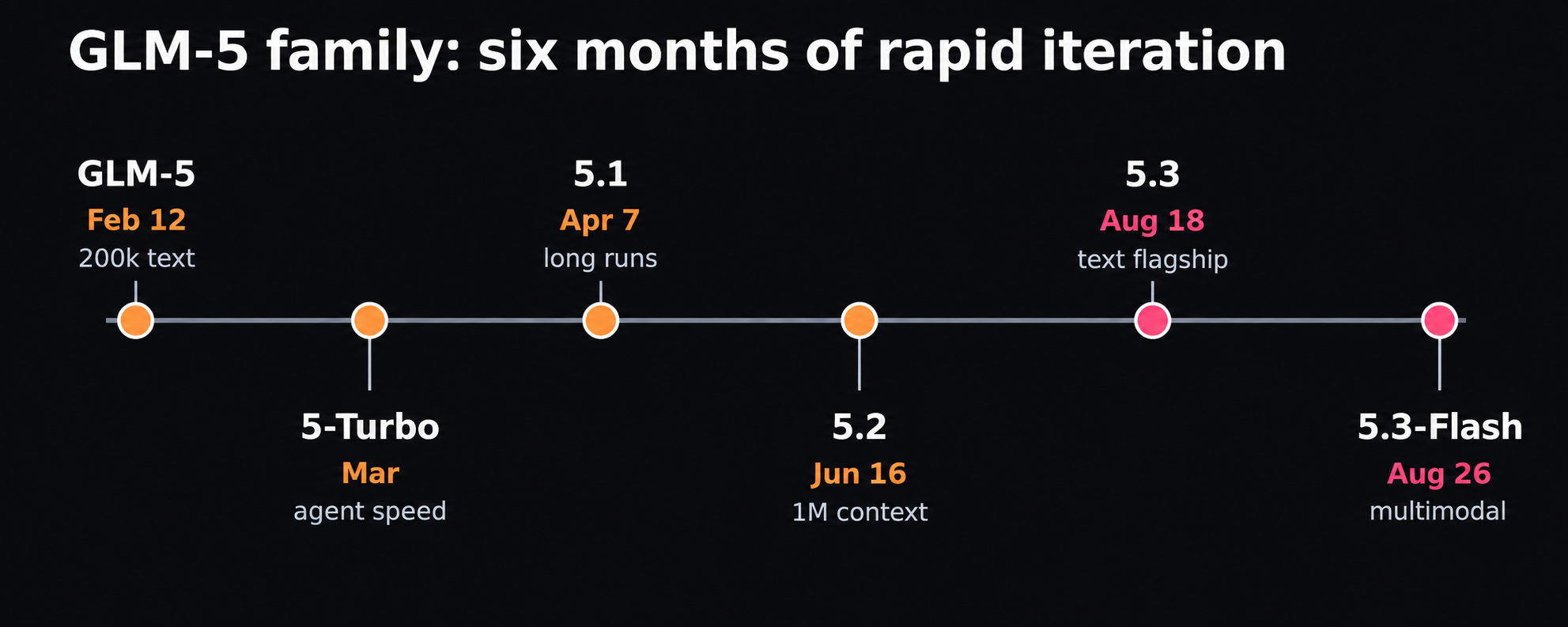
Figure2. Six months of releases changed context length, modality, reasoning behavior, and price.
From GLM-5 to GLM-5.2
The agent-based architecture was set up on the base GLM-5. GLM-5.1 focused on sustained runs; Z.ai claims it can run for up to 8 hours, but you should take that with a grain of salt, as your repository may be different. A one-million-token context window, flexible effort settings, and IndexShare for efficient long-context attention were then added to GLM-5.2.
GLM-5.3 and GLM-5.3-Flash
The flagship for GLM is text-only: GLM-5.3. As per its documentation, it has a limit of 1 million tokens in input, a limit of 128K in output, and low, high, or max reasoning effort. Thinking cannot be disabled; a 5.2 request that explicitly disables it can fail during migration.
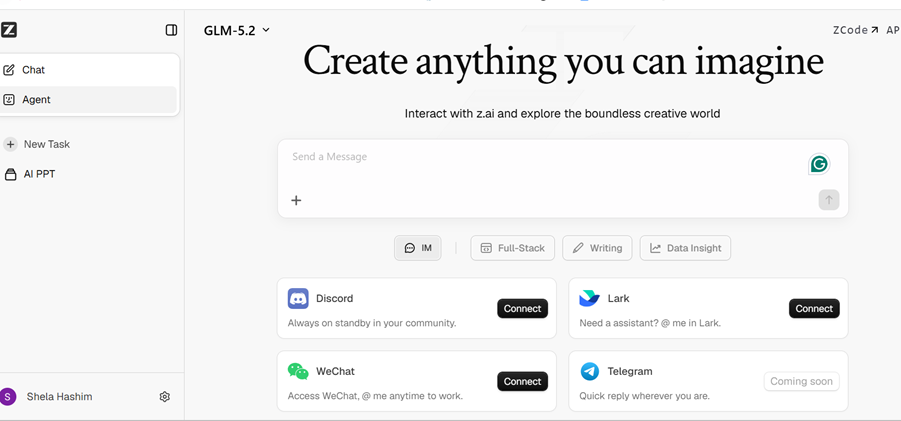
Figure 3. The live GLM-5.3 interface confirms a distinct flagship route; availability and labels can change.
GLM-5.3-Flash is another 320B-total/18B-active model that features native multimodal input and hybrid sparse/linear attention. My initial recommendation is pretty straightforward: when depth is important, use 5.3; when screenshots or lots of volume is involved, test Flash first.
Replay saved requests instead of simply updating the model name prior to changing an existing integration. Test structured output, tool-call arguments, max completion length, and handling of timeouts. A response may be more visually appealing in chats but may cause the parser to fail or simply be over the latency limit of your application. Maintain the old route until the new version is through the same production gates.
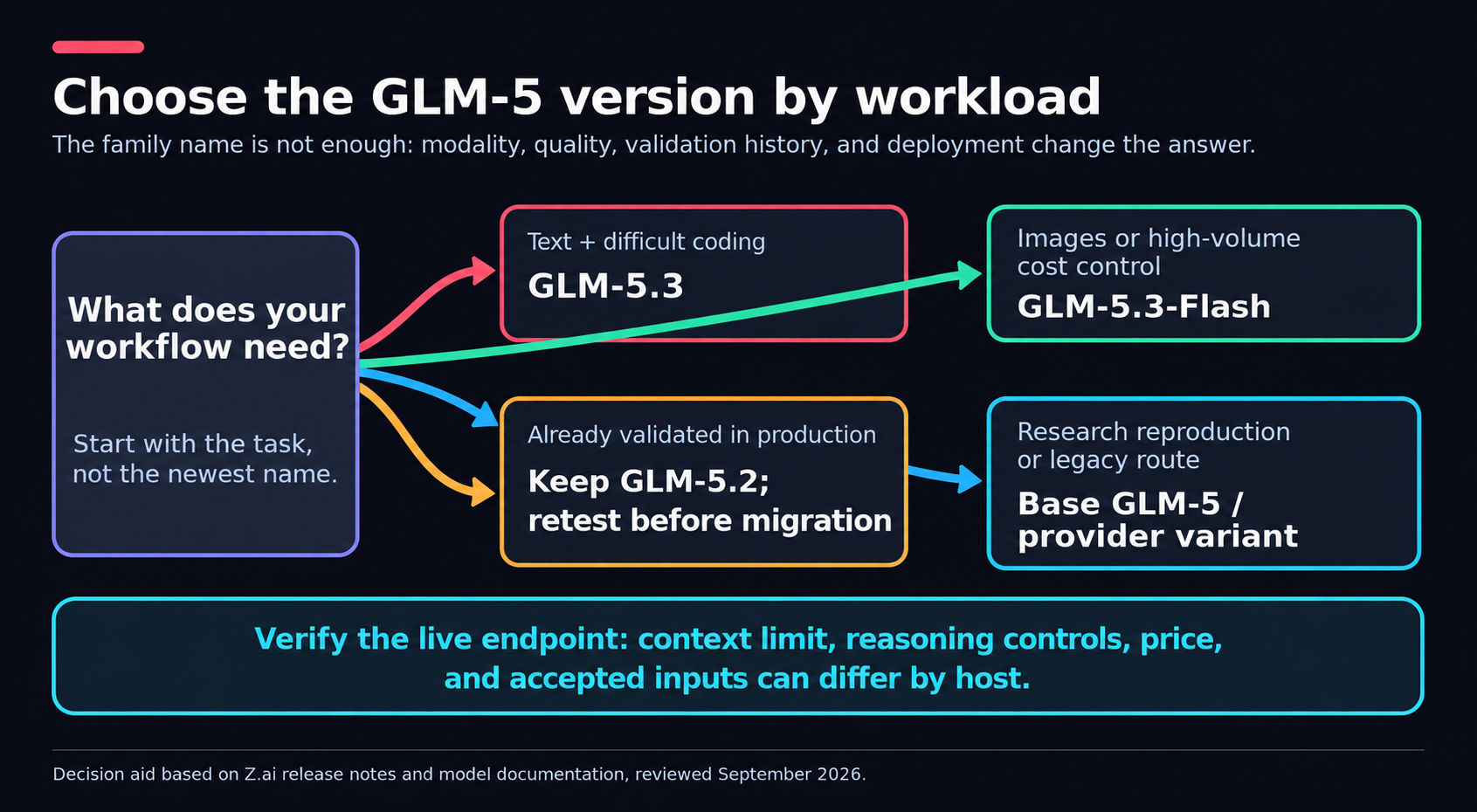
Figure 4. Choose by workload and endpoint behavior, not by the newest model name alone.
How Does GLM-5 Compare With Claude, GPT, and Gemini?
GLM-5.3 belongs on a coding-agent shortlist, but one table cannot crown an overall winner. Terminal-Bench scores depend on the harness, tool permissions, time budget, and effort level. Z.ai reports 88.2 on Terminal-Bench 2.1 and 28.3 on Terminal-Bench 3.0 for GLM-5.3 at max effort; its table also reproduces results for Claude Opus 4.8 and GPT-5.6 Sol.
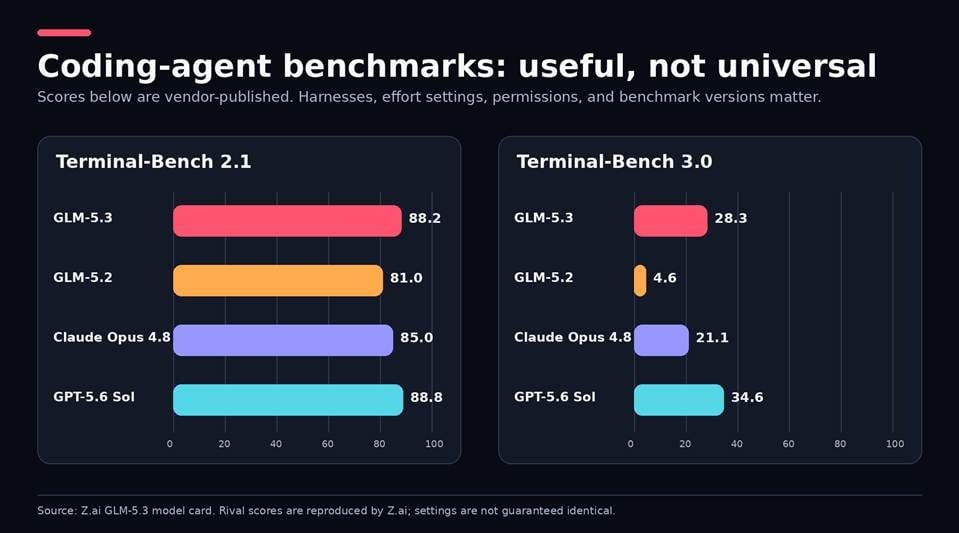
Figure 5. Vendor-published scores are directional evidence, not a substitute for an identical, workload-specific test.
Unlike other models, the GLM-5.3 model card names its harnesses and effort settings. It doesn't say that rival models were operated under identical conditions. Similarly, according to the GLM-5.2 report, it outperforms Gemini 3.1 Pro across a subset of Terminal-Bench 2.1 tasks, a small part of which are the coding tasks mentioned here; however, this does not indicate that GLM outperforms Gemini 3.1 Pro in all multimodal, research, or writing tasks.
I would review models with the same prompts and tools, timeout, and criteria for passing. Note the price of a successful task, NOT the price of the token. A less expensive model that fails three times could turn out to be the more costly, and when Flash runs your tests, it passes on the first attempt; a flagship advantage is meaningless.
The GLM-5.3 model card is reasonably unique in that it exhibits the names of harnesses and levels of effort. Whether any other competitive models were not tested under the same conditions is still to be shown. Likewise, the GLM-5.2 guide states that it outperforms Gemini 3.1 Pro on Terminal-Bench 2.1 — a word order task for coding agents — not that it necessarily outperforms either multimodal or research tasks or writing tasks.
I will look at the models using the same prompts, tools, timeout, and pass. Only focus on the cost of the successful task, NOT on the price of the token. If there are tests that are successful the first time, Flash is perhaps the more expensive one, as its advantage is reduced to probably only a flagship as well.
Inside GLM-5 Training and Architecture
Sparse Attention and IndexShare
It is costly to use long context since attention typically takes into account many relationships between tokens. The indexer is inserted in GLM-5.2, so that the same indexer can be used in 4 different layers of the attention to get the correct locations. Z.ai states that they are 2.9× less per-token FLOPs at 1M tokens. It's an efficiency statement from the developer and not an endpoint latency or request cost statement.
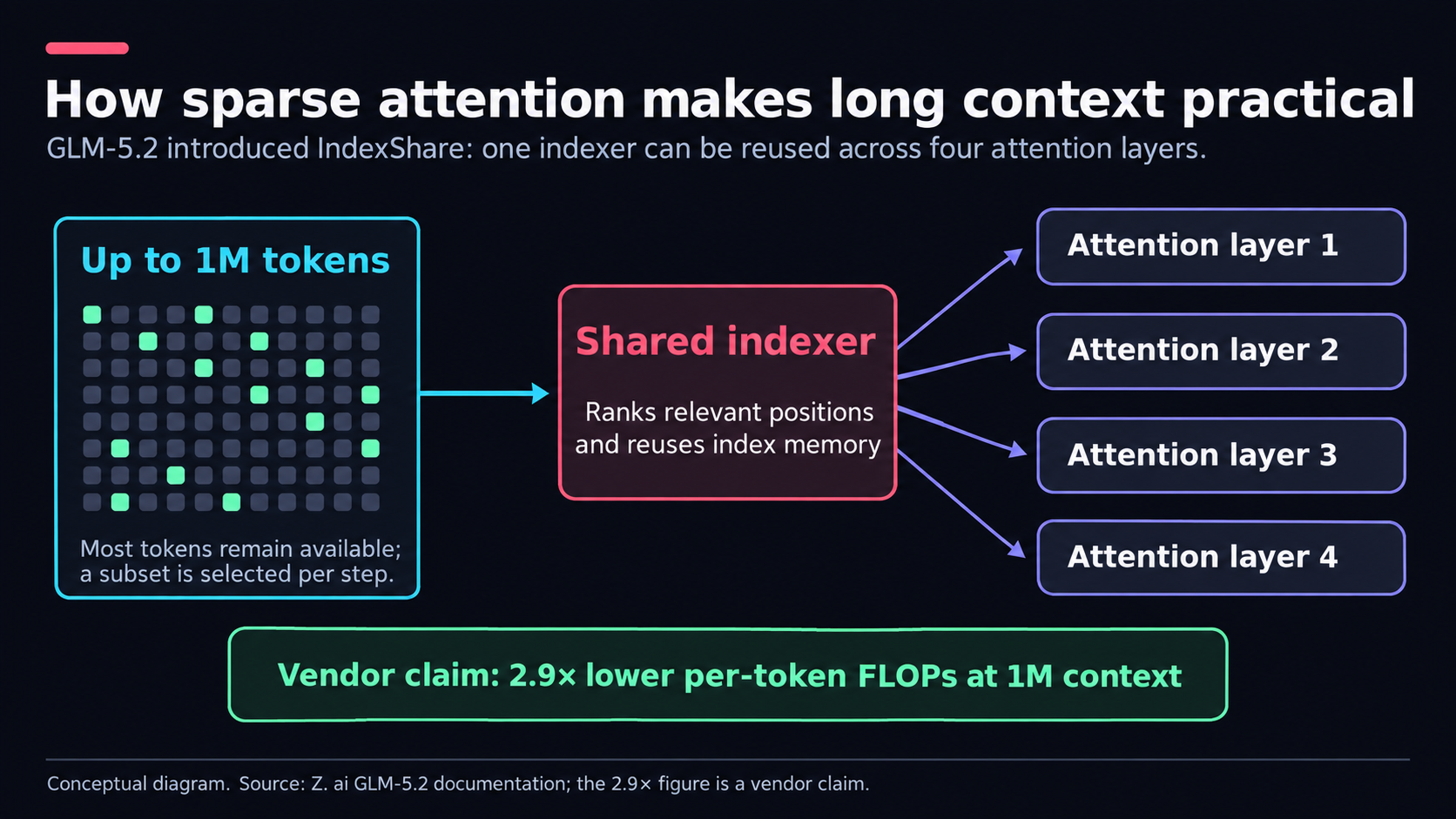
Figure 6. IndexShare reuses one indexer across four attention layers; the 2.9× figure is Z.ai’s claim.
Long-Horizon Reinforcement Learning
For GLM-5.3, Z.ai introduces their vision of an asynchronous reinforcement-learning system which they call slime, context compaction, and synthesized verifiers. These techniques focus on the things you see agents doing wrong in long runs: losing the goal, leaving a task, or not checking the answer. Even then, some checkpoints and external tests are required, and so can be a larger trajectory, larger failure trace.
Cybersecurity Capability Needs Human Validation
Based on its security collaboration, Z.ai reveals 2,436 vulnerabilities from 269 open-source projects, 1097 of which are medium to high severity. The model numbers are likely to be pertinent to GLM-5.3 when it comes to defensive review, but GLM-5.3 does not identify a vulnerability, only a model finding.
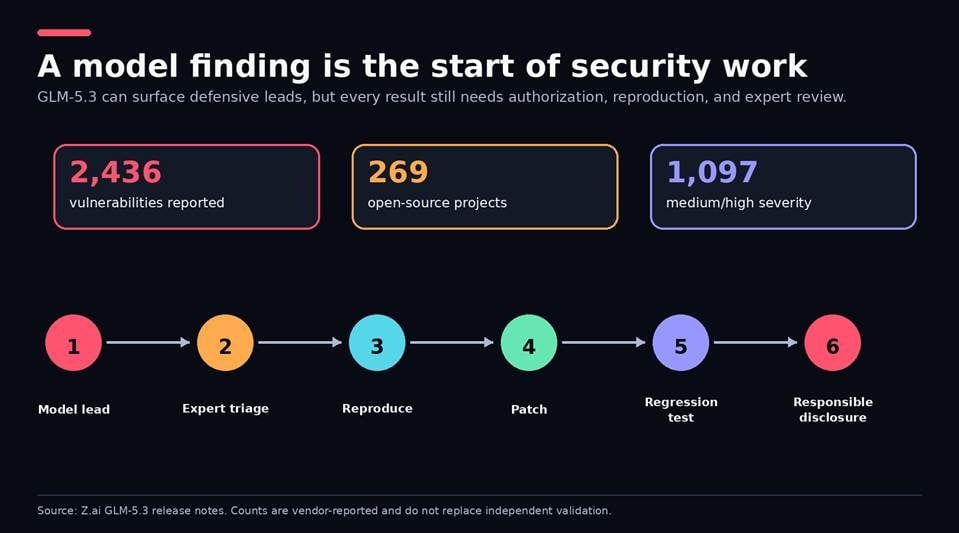
Figure 7. Reproduce, patch, regression-test, and disclose responsibly; never point an agent at systems you are not authorized to test.
GLM-5 Pricing
Z.ai separates out the costs of uncached input, cached input, and output as of September 2026. I double-checked these prices with the pricing page on the official website; don't just assume these prices when you post a budget, as they may vary over time.
| Model | Input / 1M | Cached input / 1M | Output / 1M |
|---|---|---|---|
| GLM-5 | $1.00 | $0.20 | $3.20 |
| GLM-5.1 | $1.40 | $0.26 | $4.40 |
| GLM-5.2 | $1.40 | $0.26 | $4.40 |
| GLM-5.3 | $1.40 | $0.26 | $4.40 |
| GLM-5.3-Flash | $0.15 | $0.03 | $0.50 |
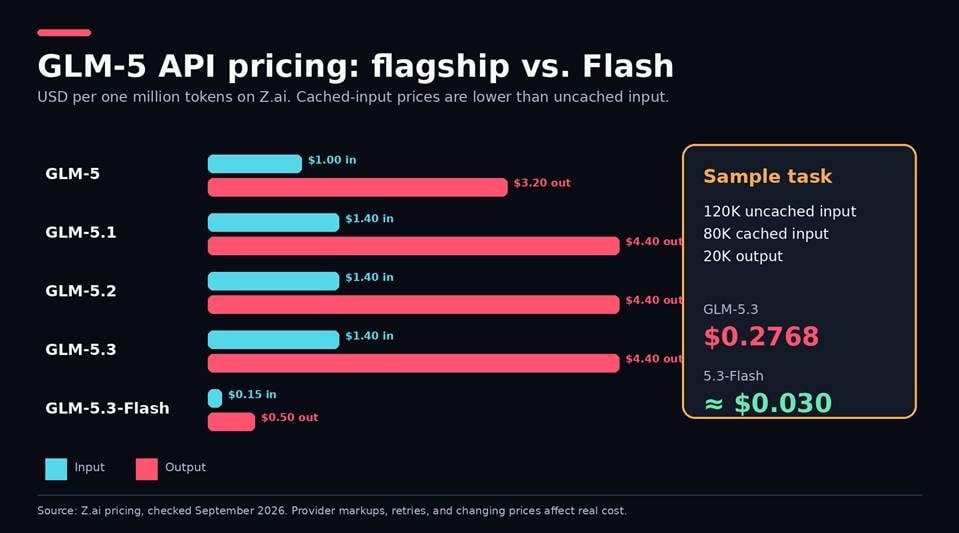
Figure 8. Z.ai API pricing shows why output length and retries can dominate the final bill.
The cost of GLM-5.3 is approximately $0.2768 for 120K uncached input, 80K cached input, and 20K output; 5.3-Flash is approximately $0.030 (excluding retries). Other hosts like OpenRouter can be used to provide various prices, limits, latency,y and routing. The GLM Coding Plan is not a production API allowance, but rather a separate subscription for supported coding tools.
Output is the costly aspect of the request, and an agent that reasons for a long time can surpass a quick estimate. I'd have an output ceiling, and use caching where repeated context qualifies,s and log cost per completed task. When producing a production budget, consider retries, unsuccessful tool calls, and the time required by humans to fix weak responses. This is the number that you should compare from provider to provider.
How to Use GLM-5
| Route | Best for | Where inference runs |
|---|---|---|
| Z.ai Chat | Fast qualitative evaluation | Z.ai servers |
| Z.ai API | First-party integration | Z.ai servers |
| OpenRouter | Provider choice and failover | Selected hosted provider |
| Enter MaaS | Model access inside an app-building workflow | Hosted route shown in Enter |
| Hugging Face + vLLM/SGLang | Self-managed deployment | Your infrastructure |
| Ollama :cloud | Remote access through the Ollama client | Remote servers, not your laptop |
Start With Z.ai Chat
The lowest-friction GLM 5 chat route is chat.z.ai. Use it to test prompt behavior and output structure, but note the exact model displayed in the interface. Do not promise a team “free” or “unlimited” use without checking the current account quota.
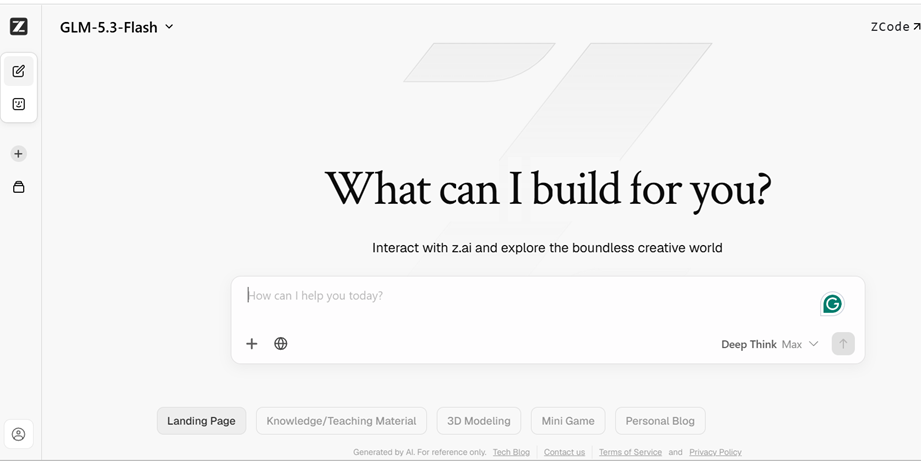
Figure 9. The chat interface is a quick qualitative check, but the displayed model and account quota still matter.
Call the Z.ai API or OpenRouter
Z.ai provides an OpenAI-compatible endpoint, which means that the official Python SDK can be used with a different base URL. Store the API key in an environment variable and record the model ID, effort, number of tokens used, and whether it completed.
Figure 10. Z.ai’s OpenAI-compatible endpoint reduces SDK changes; it does not remove migration testing.
import os
from openai import OpenAI
client = OpenAI(
        api_key=os.environ["ZAI_API_KEY"],
        base_url="https://api.z.ai/api/paas/v4/",
)
response = client.chat.completions.create(
        model="glm-5.3",
        messages=[{"role": "user", "content": "List five tests for a password-reset flow."}],
        max_tokens=4096,
        extra_body={"thinking": {"type": "enabled"}, "reasoning_effort": "high"},
)
print(response.choices[0].message.content)
When migrating from 5.2, remove a request that sets thinking to disabled; GLM-5.3 does not accept that behavior. If you use the OpenRouter GLM-5.3 route, record which provider handled the request when governance or reproducibility matters.
Download and Self-Host the Weights
Use the official repository or verified GLM-5.3 Hugging Face card. Z.ai lists SGLang, vLLM, Transformers, KTransformers, and Unsloth among the supported paths.
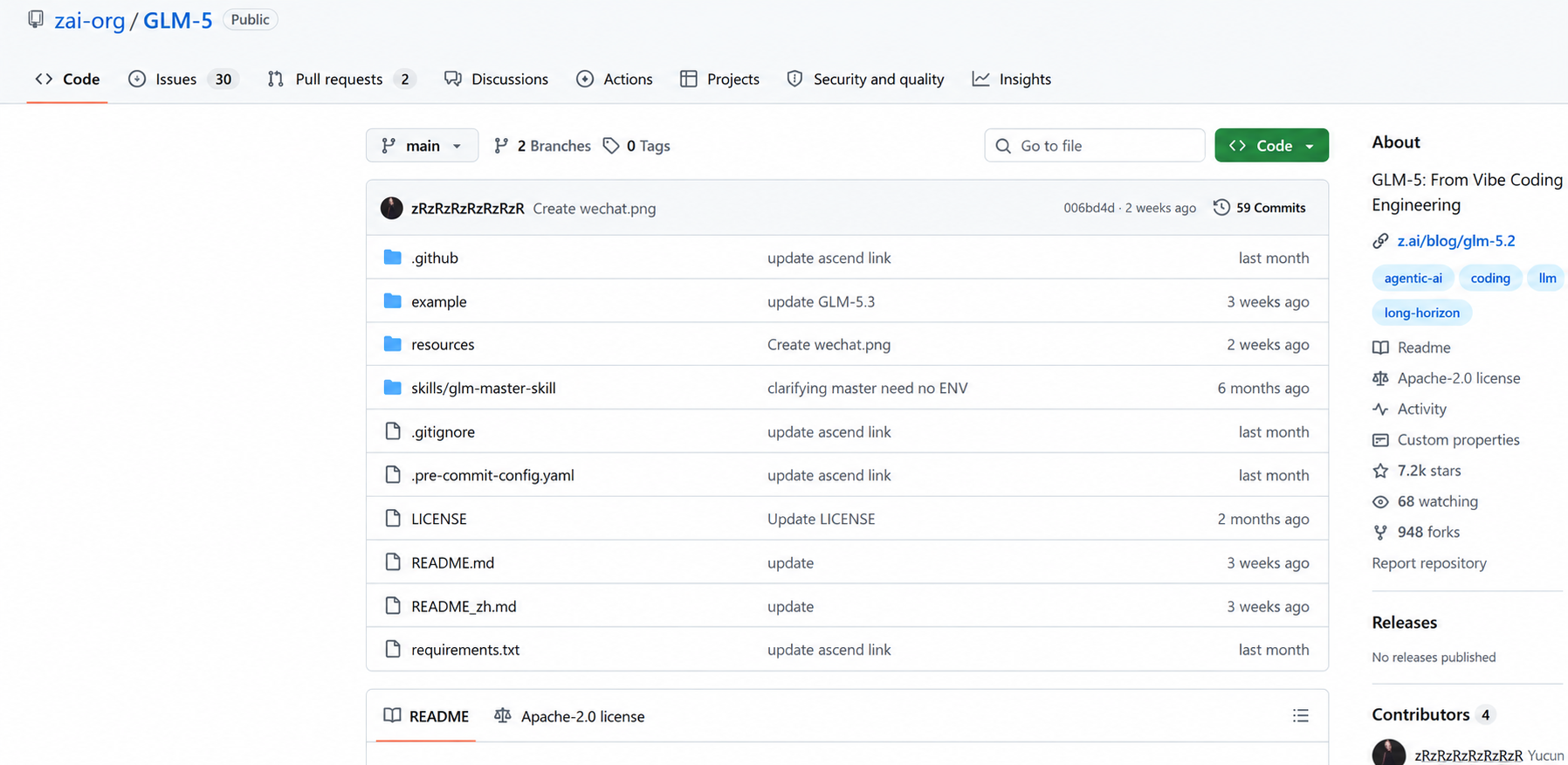
Figure 11. Use the verified repository and model card rather than an unofficial weight mirror.
Downloadable does NOT equal runnable. Quantization reduces memory requirements, but can alter quality; at a 744B checkpoint, server-class storage and accelerators are required. You should read the Ollama GLM-5 listing carefully: a tag with: cloud means it is remote inference. It must be local weights, local runtime, and sufficient hardware.
How I Would Evaluate GLM-5 Before Production
I would not start with a broad “Which model is smartest?” prompt. I would run four representative tasks against 5.2, 5.3, and Flash using the same tools and limits: fix a repository bug, retrieve planted facts from a long document, complete a multi-tool workflow with one induced failure, and produce an output against a written rubric.
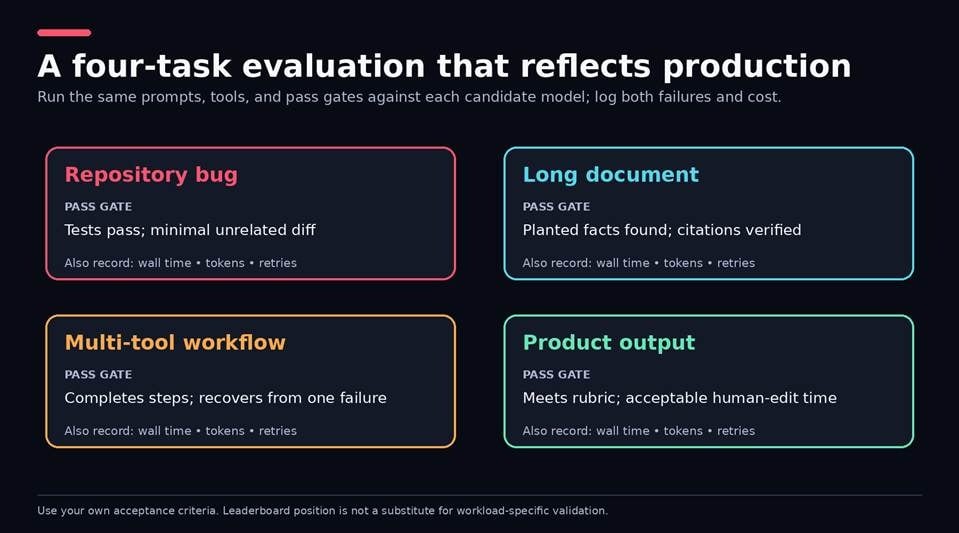
Figure 12. A small, repeatable workload test is more useful than a broad “smartest model” prompt.
Pass/fail, wall time, tokens, retries, human-edit time, and provider. This makes it possible to detect migration risks that benchmark averages don't show -- such as 5.3's always-on reasoning and potentially lengthy output. It also informs you if Flash's lower price is able to survive contact with your acceptance tests.
Who Should Use GLM-5?
Agentic Coding and Repository Work
GLM-5 is an excellent option if a task involves searching a repository, coordinated edits, test execution, and tool calls. The public benchmark evidence is a support for that short list, but your acceptance gate should be solid: tests pass, the diff is focused, and no credential or network boundary is crossed. Provide a separate work area and use least privilege. With more autonomy without controls, bigger failure traces are only produced.
Long Documents and Knowledge Work
One million token models apply to specifications, research packets, and big codebases. Big context window shouldn't be considered reliable retrieval. Place plant information at the beginning, middle, and end; cite; verify cited information. I would also draw parallels to a retrieval pipeline, as it might be slower and costlier to put everything in one big prompt than to first select useful evidence.
Multimodal and Defensive Workflows
With GLM-5.3-Flash or GLM-5V-Turbo, screenshots, interface states, or other visual inputs supported by the job are part of the job. Use all the findings as leads for the defensive security review and reproduce and triage them. GLM-5 is a less favorable fit for those who wish for a small local laptop model, who cannot make deployment decisions, or who are unable to verify host residency and retention terms.
Is GLM-5 Safe for Private or Company Data?
Hosted Routes
It's not just the model; it depends on the route. There are various data paths, such as Z.ai Chat, the Z.ai API, another host, or a self-managed deployment. Begin with the Z.ai privacy policy, and follow up with all the intermediaries to determine the retention, training use, deletion, residency, and contractual terms.
Do pin a provider if an aggregator provides it, and don't send secrets just because it is convenient. Hosted data is what is determined by your contract and configuration, not the words “open weights”.
Self-Hosting
Self-hosting keeps prompts in your environment, but you are responsible for weights, credentials, patching, network controls, and monitoring. I would still guess there's a way to inject early and insecure generated code. Split build and production credentials, limit outbound network access, audit tool actions, and maintain human approvals for material changes. Do not grant agents more authority than is necessary for the task.
How to Use GLM-5 With Enter Pro
GLM-5 is not a direct competitor of Enter Pro. GLM provides model capability, whereas Enter Pro provides a Product Building Workflow around models. That is useful when you're not just looking for a “get a completion” but a “get a completion that can be turned into an interface, logic, and a publishing path.”
If API control, custom infrastructure, or a specific data structure is required, the direct route is the better option. When the product workaround is a limiting factor, Enter Pro comes into play. Its AI MVP Builder streamlines the planning, app creation, visual editing, and publishing into a single process, while Enter Code provides a terminal-centric approach for repository tasks.
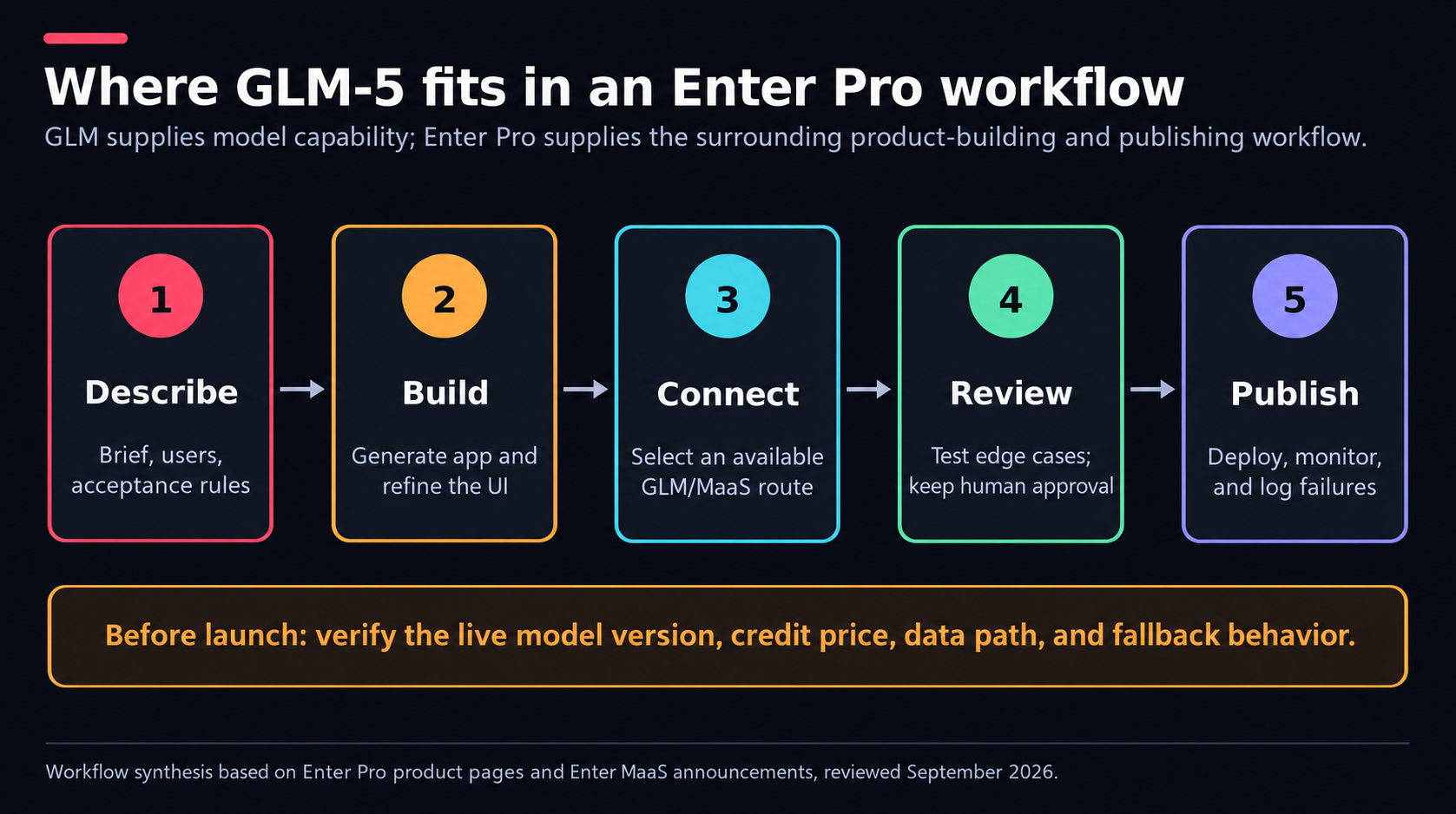
Figure 13. The model generates or classifies; the product workflow adds UI, review, deployment, and monitoring.
The changelog of Enter confirms GLM-5.2 in the previous AI All catalog on June 17. The Enter MaaS announcement mentions GLM 5 and explains how the models are priced in credits. It doesn't actually state that it confirms GLM-5.3, so be sure to check the live model selector, credit price, context limit, and data path before designing around a specific version.
A support-triage app indicates where the combination is sensible. With Enter Pr,o you can design the ticket form and view the dashboard, and link an existing GLM route to categorize tickets and compose responses. Prior to publication, validate empty model responses, ambiguous requests, multilingual input, prompt injection, and private data within the message body. Have a person in between the draft and send button. And the send button.
| If your priority is… | Choose a direct GLM route | Choose Enter Pro |
|---|---|---|
| Model parameters and provider control | Yes | Only within exposed options |
| Visual app creation and editing | Build or add separate tooling | Core workflow advantage |
| Custom hosting and network policy | Strongest fit | Verify platform fit first |
| Fast path from model output to product UI | More engineering required | Stronger fit |
But Enter doesn't make GLM smarter, and the fact that GLM has access to an app doesn't make their coding agent smarter, either. If it's about integration or UI work, I would opt for Enter. If you're in that position, then open the Enter Pro workspace and check the model catalog in place before you make a commitment on your architecture.
Conclusion
Although it's called GLM-5, the variety and serving method are equally important when it comes to coding and long-horizon agents! Use GLM-5.3 for hard text and code, GLM 5.3-Flash for multimodal and/or volumes, and retain 5.2 until migration has become cost-effective. Then test on your own tasks before using the leader/vendor as production evidence.
The one that actually fulfills your acceptance criteria and which is within your latency & privacy range and still has the right price after retries is the one that will actually work, irrespective of the nigh-perfect mark it may bring in on that one individual.
Start Building with Enter Pro →
FAQs
FAQ 1: Is GLM-5 Free?
The public weights are available for download, with no per-token API fees, but hardware and operations will be paid for. Z.ai Chat might have quota-based access. Hosted APIs, routers, and GPU servers are paid services, and there may be a difference in the version and route.
FAQ 2: Which Version of the GLM-5 Is Better?
For challenging text/codin,g I start with GLM-5.3. GLM-5.3-Flash is the superior initial test for images, screenshots, or cost-critical volume. Do not use GLM-5.2 when it has already been validated, and the risk of migration is greater than the potential benefit.
FAQ 3: Is GLM-5 Able to Write and Debug Code?
Yes. The coding agents and repository-scale engineering are key use cases, with good results reported by vendors with regard to Terminal-Bench and DeepSWE. Sandbox, tests, restricted permissions, and human review are still required.
FAQ 4: How Much Is GLM-5 API?
In September 2026, Z.ai lists GLM-5 at $1.00 input and $3.20 output per million tokens; GLM-5.3 at $1.40 and $4.40; and 5.3-Flash at $0.15 and $0.50. Cached input is less expensive. Real cost is impacted by provider markups and retries.
FAQ 5: Is GLM-5 Open Source Software?
“Open weights” is safer. The weight license, repository code license, and the training-data transparency are different questions. As part of commercial deployment, be sure to check the specific Hugging Face model card and repository license.
FAQ 6: Can GLM-5 Be Used Locally (With Ollama)?
Only if you have local weights, runtime support, and sufficient hardware to support that. The cloud tag means that it's running on remote infrastructure, so it doesn't necessarily mean that the entire 744B is running on your device.
FAQ 7: Is GLM-5 Capable of Processing Images?
Base GLM-5 & GLM-5.3 are text-only. For multimodal inputs, use GLM-5.3-Flash or GLM-5V-Turbo; check accepted file types at the endpoint selected.